.svg)
Week 31 Weekly Wrap: UK Retail Footfall Insights with location analytics
UK retail centres improved by 7% as advanced location analytics and location intelligence drive shopper engagement.

August 21, 2025
4 min read
Table of contents
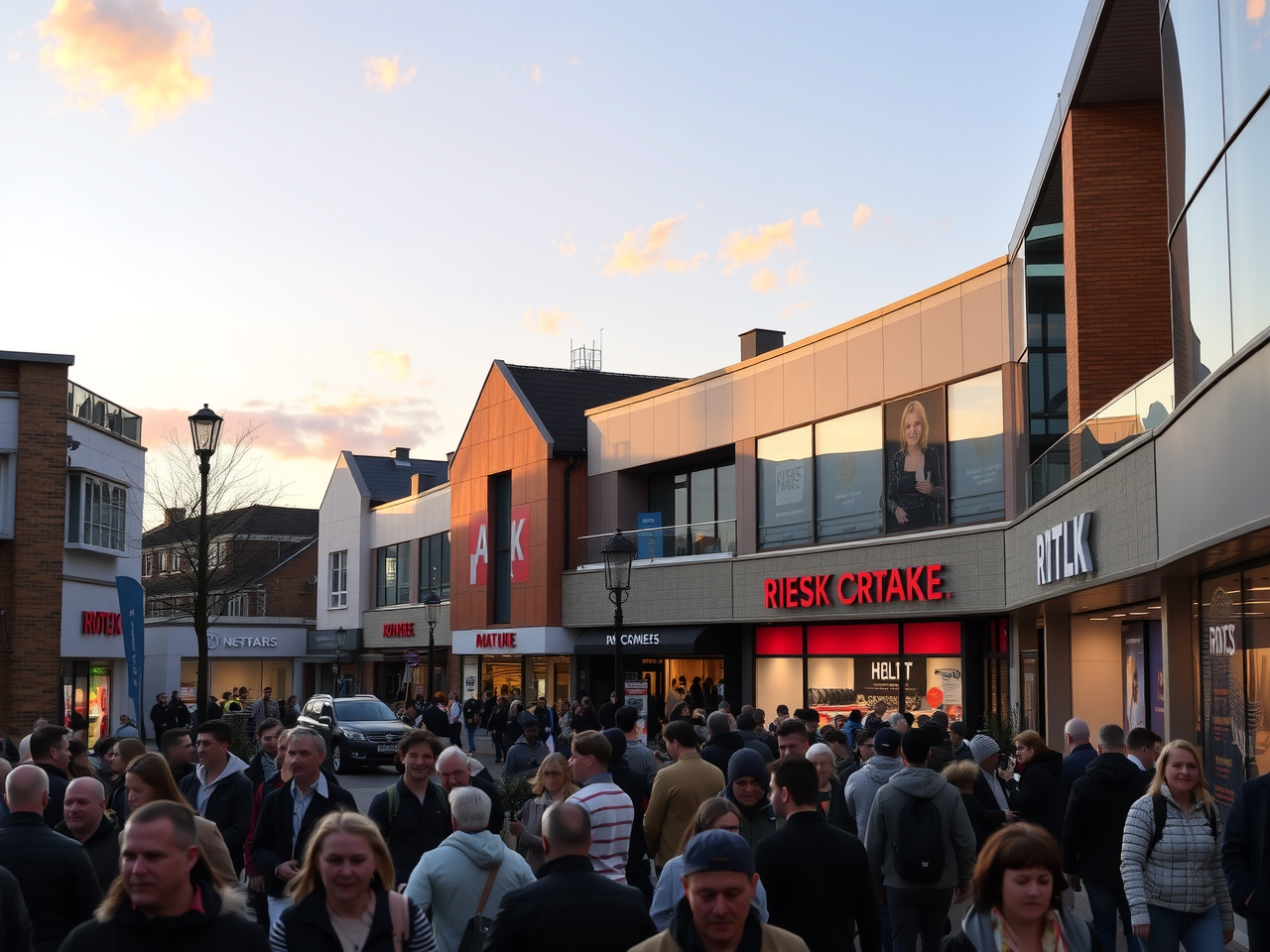
UK retailers are watching visitor patterns change as even subtle shifts in retail footfall make a big impact. Recent findings reveal that improvements in visitor duration and numbers are reshaping strategies across retail centres. By using advanced location analytics, industry experts have a clearer picture of evolving shopper behaviour.
A Closer Look at Major Retail Centres
Major retail centres continue to show resilience with a weekly rise in visitor numbers. In Week 31, centres recorded an average daily footfall of 84,600, marking a 1% increase from the previous week and a 7% year-on-year growth. More detailed insights are available in the Week 31 Major Retail Centres update, which highlights how even small percentage gains matter in a competitive market.
Shopping Centres and Changing Dynamics
Shopping centres have experienced minor contractions in footfall, with a 0.9% decrease to an average of 36,000 daily visitors in Week 31. Despite this, the average visit length has improved by 5.8%, suggesting that customer engagement is still healthy. The report for the retail sector in shopping centres provides further details in the UK Shopping Centres Week 31 update, noting that location intelligence is playing a critical role in understanding these trends.
Divergent Trends Across Local Retail Centres
Local retail centres are showing mixed performance with regional differences that underline the complexity of the current retail environment. One report shows an 11.5% increase in footfall, while another highlights a slight 0.3% drop on a weekly basis. These contrasting trends reveal that local retail centres face unique challenges, as further discussed in the UK Local Retail Centres Week 27 update and the Week 31 Local Retail Centres update.
Retail Parks: Small Declines and Renewed Engagement
Retail parks have experienced a small decline of 0.4% in overall footfall during Week 31, with an average of 20,300 daily visitors. However, the increase in dwell time by 2.8% to 73 minutes demonstrates growing customer engagement. Further analysis on this evolving trend can be found in the UK Retail Parks Week 31 update and the Week 27 Retail Parks review.
High Streets and Town Centres on the Mend
High streets and town centres are beginning to show signs of recovery as they record promising annual increases. Week 31 data reveals an average of 32,500 daily visitors and a 2.8% annual growth in footfall, with dwell time averaging 98 minutes per visit. More detailed figures are discussed in the UK High Streets & Town Centres Week 31 update, emphasising that location analytics is essential for planning future recovery strategies.
Economic and Weather Influences
Weather and economic conditions continue to play a role in shaping consumer behaviour and retail dynamics. Warmer weather and shifts in consumer sentiment are prompting businesses to rethink their strategies using both location analytics and location intelligence. The report notes that retailers are now more focused than ever on using detailed location intelligence to adapt to regional variances and enhance customer experiences.
Industry Insight and Expert Commentary
Joe Capocci, Huq Industries Spokesperson, commented, "The detailed figures from our location analytics reports are a vital tool for understanding shifting consumer patterns. Even minimal gains in footfall can signify the need to adapt marketing strategies and infrastructure investments. Our approach is to use these insights to target improvements across every retail channel." His statement underscores the importance of data in driving positive change in the retail environment.
Strategic Implications for Retailers
Retailers must now balance short-term footfall variations with long-term improvements in dwell time. The combination of location analytics and emerging location intelligence is providing key insights into area-specific trends. This means adapting strategies for major retail centres, shopping centres, local retail centres, and retail parks to harness subtle yet impactful trends.
Summing Up the Trends
The interplay of minor weekly and annual shifts in UK retail footfall indicates evolving market conditions. Small changes in the numbers, such as the 1% increase in major centres or the slight dip in shopping centre visits, have significant strategic implications. Retailers are advised to continue focusing on detailed data to understand the shifts in retail centres and optimise their operations.
Looking Ahead
As consumer behaviour gradually shifts, detailed data from location analytics is becoming indispensable. Retailers are encouraged to deploy tailored strategies for each segment – from high streets and town centres to local retail centres. Future trends will undoubtedly require further application of location intelligence to ensure enduring engagement and success.
Media: For all media and press enquiries, please contact media@huq.io
About Huq Industries
Huq Industries is the leading provider of location intelligence across the UK, Europe, and the Middle East, specialising in delivering high-quality data insights on footfall, consumer behaviour, and retail performance. By leveraging advanced analytics, Huq Industries enables retailers and analysts to understand and respond to market trends effectively, ensuring they are well-equipped to navigate the changing landscape of high street and town centre commerce.
Get the latest intelligence Benchmark update each Thursday!
Frequently Asked Questions
Clear answers to the most common questions about movement intelligence, retail expansion, and location analytics.
Related Blogs and Insights


.svg)
Empowering strategic teams with the world's most accurate and accessible location intelligence.
Contact

.svg)