.svg)
Week 22 Weekly Wrap: UK Footfall Data Trends
Discover this week's UK retail landscape as local centres display a modest 9.1% increase in footfall, with key insights via footfall analytics.

June 19, 2025
4 min read
Table of contents
Introduction: A Dynamic Retail Landscape
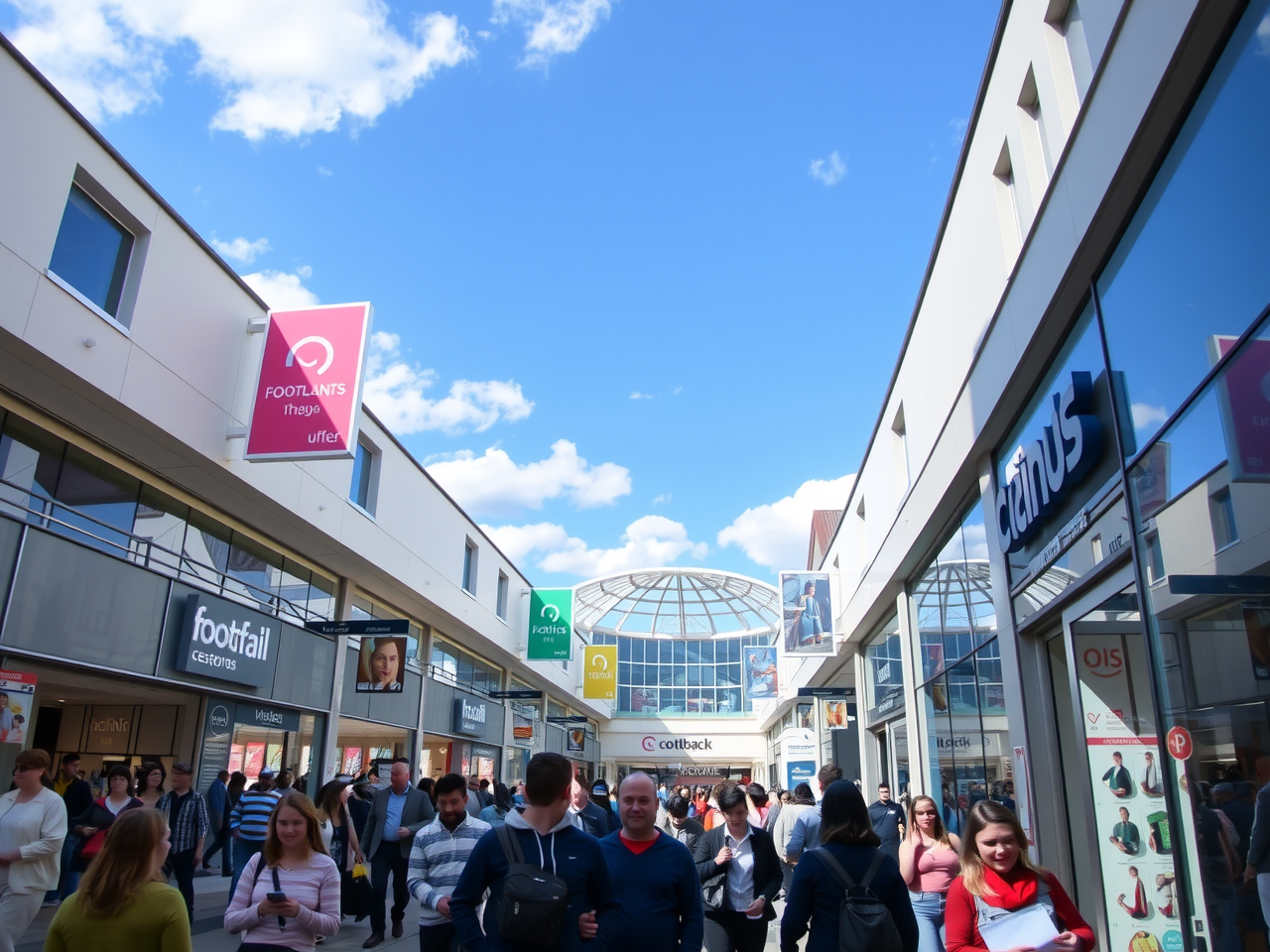
UK retail continues to evolve with shifting patterns in footfall and consumer engagement. Recent updates reveal that footfall data across several retail centre types have begun showing noticeable improvements alongside mixed performance trends. With a blend of modest gains and cautious declines, the story this week is one of resilience and adaptation, as tracked by cutting-edge footfall analytics.
Major Retail Centres – Steady Growth
Major retail centres remain a cornerstone for the UK retail sector. In Week 21, these hubs reported an average daily footfall of roughly 80,100 and an average dwell time of 119 minutes, reflecting a steady year‑on‑year gain. Detailed breakdowns are available in the Week 21 Weekly Wrap: UK Retail Trends and Insights Through Location Analytics. This consistency underlines the sector’s ability to maintain momentum in an ever-changing market.
Local Retail Centres – Mixed Yet Promising Insights
Local retail centres display a more nuanced picture with modest improvements and targeted growth. Week 21 figures indicated an average daily footfall of 14,800, up by 2.2% week‑on‑week, and a modest annual growth of 0.6%. Regional data shows England with stable numbers, Scotland with slightly lower figures but longer average visit durations at 109 minutes, and Welsh centres offering the longest dwell times of 119 minutes. More details can be found in the UK Local Retail Centres – Week 21 2025 Footfall Analytics Performance Update.
Shopping Centres – Signs of Recovery
Shopping centres are signalling a recovery in a challenging economic climate. One Week 21 update reported an encouraging 9.1% increase in footfall, reaching 35,700 visitors daily, with dwell times remaining robust at 118 minutes. A subsequent update in Week 22 noted slightly lower overall footfall at 33,600 but maintained strong engagement levels. For a deeper insight into these trends, explore the updates on UK Shopping Centres – Week 22 Performance Update 2025: Footfall Retail Trends and UK Shopping Centres – Week 21, 2025 Performance Update featuring Location Analytics.
Retail Parks – Challenges Amid Extended Visits
The outlook for retail parks appears more challenging as weekly comparisons reveal a decline in visitor numbers. In Week 19, retail parks recorded 18,700 daily visitors, but by Week 22 this average dropped to 17,600, showing an 11.5% annual decrease. However, dwell times increased by 8.5% to an average of 77 minutes, which could hint at a more engaged customer base despite lower footfall. Regional variations are stark, with England’s centres showing slight improvements, Welsh parks remaining steady, and Scotland facing sharper declines. More comprehensive figures are presented in the UK Retail Parks – Week 22 Performance Update 2025: location analytics Insights.
High Streets and Town Centres – Stability In Focus
High streets and town centres continue to exude stability in a fluctuating market. For Week 22, overall daily footfall hovered around 31,000 with a minute weekly dip of 0.4%, while annual growth touched 3.6% and dwell times increased to 98 minutes. England’s centres reported a robust annual performance, Scotland experienced a sharper weekly drop of 4.6%, and Welsh centres demonstrated impressive year‑on‑year gains. These trends not only underscore the significance of footfall statistics but also reveal consumer reliance on familiar high street experiences, as highlighted in the UK High Streets & Town Centres – Week 22, 2025 Performance Update: Insights from Location Analytics.
Retail Trends and Expert Perspectives
Across all retail formats, recent data reveals that while footfall figures may show minor setbacks, dwell time trends remain promising. A growing focus on footfall counting and footfall retail analysis is enabling operators to fine-tune strategies on a regional basis. Joe Capocci, Huq Industries Spokesperson, remarked, "The evolving nature of consumer behaviour demands that retailers adapt through sophisticated footfall analytics. Although some regions face challenges, the overall increase in engagement underscores a positive turn in customer experience." This statement further cements the role of innovative analytical tools in planning for the future.
Regional and Sectoral Insights: A Balanced View
When assessing the performance of retail centres, it is clear that regional disparities play a significant role. In England, both major centres and shopping areas continue to gain momentum. Conversely, Welsh and Scottish regions face differing challenges, with some centres demonstrating prolonged dwell times that could balance out lower visitor numbers. These varied outcomes highlight the importance of targeted strategies in footfall retail environments and suggest that a one-size-fits-all model may not be effective. Retail professionals are encouraged to consider these subtleties when making operational decisions.
Conclusion: Navigating the Future of Retail
This weekly analysis encapsulates the dynamic nature of UK retail, where improved engagement and strategic data use are key themes. As retailers harness detailed footfall analytics to understand complex market trends, both consumer behaviour shifts and regional nuances are driving business adaptations. In summary, while footfall numbers provide the initial insight into store performance, enhanced dwell times and the strategic use of footfall data are proving essential for long-term success in today’s competitive retail landscape.
Media: For all media and press enquiries, please contact media@huq.io
About Huq Industries
Huq Industries is the leading provider of location intelligence across the UK, Europe, and the Middle East, specialising in delivering high-quality data insights on footfall, consumer behaviour, and retail performance. By leveraging advanced analytics, Huq Industries enables retailers and analysts to understand and respond to market trends effectively, ensuring they are well-equipped to navigate the changing landscape of high street and town centre commerce.
Get the latest intelligence Benchmark update each Thursday!
Frequently Asked Questions
Clear answers to the most common questions about movement intelligence, retail expansion, and location analytics.
Related Blogs and Insights


.svg)
Empowering strategic teams with the world's most accurate and accessible location intelligence.
Contact

.svg)