Business Rates 2026: Why This Matters Now
From April 2026, business rates bills across England will change following a national revaluation and a revised package of reliefs confirmed at the Autumn Budget 2025
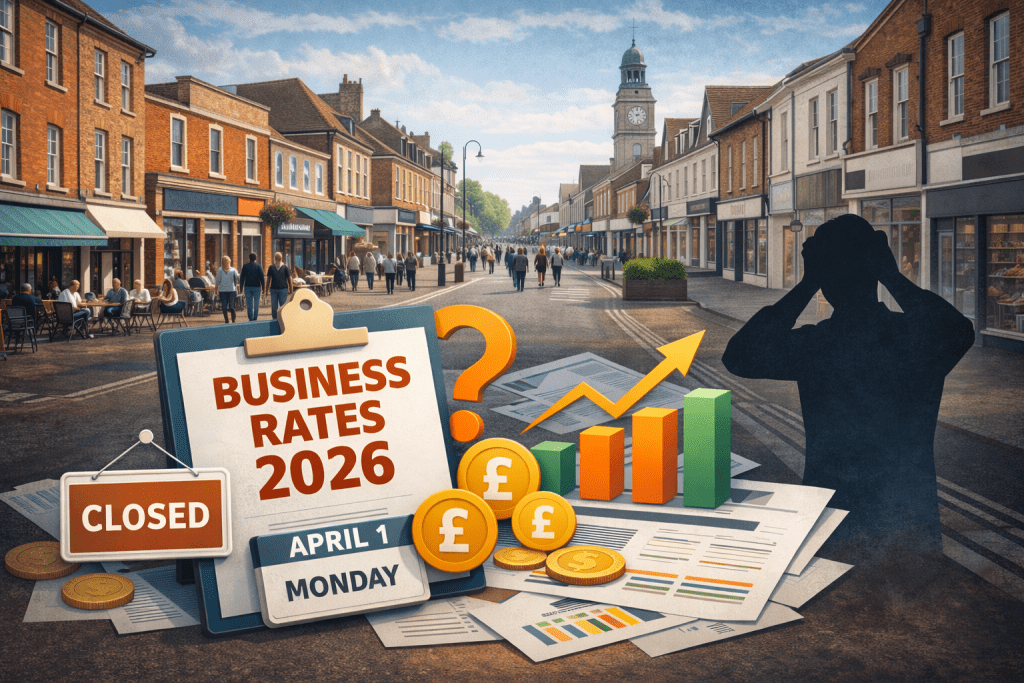
While business rates reform is often discussed as a technical or finance-led issue, the 2026 revaluation will have very real consequences for town centres. For many high street businesses, rates remain one of the largest fixed costs they face, often higher than rent.
The impact will not be uniform. Some businesses will see reductions or manageable changes. Others may face sharp increases that threaten viability.
For councils, the key issue is not whether the policy is “good” or “bad”, but how disruptive the transition becomes locally.
What Is Actually Changing in 2026?
From April 2026, England’s business rates system will undergo a national revaluation, updating rateable values to reflect changes in the commercial property market since the last valuation.
In simple terms, revaluation is meant to reset the system so that businesses pay rates based on current rental values rather than outdated assumptions. In practice, however, it often creates uncertainty, particularly for high street businesses operating on tight margins.
Alongside the revaluation, the government has confirmed a package of accompanying measures, including:
- Lower multipliers for retail, hospitality and leisure properties
- Transitional relief to cap sudden increases in bills
- Higher contributions from some large, high-value commercial properties
The Valuation Office Agency (VOA) is responsible for setting rateable values, using evidence such as rental data, location, property size and use. Its published guidance explains the methodology in detail here -> Rating System.
However, while the mechanics matter to advisers and finance teams, most businesses experience revaluation in a far simpler way: through a new bill landing on the doormat. What makes the 2026 revaluation particularly sensitive is its timing. It comes after several years of economic disruption, rising operating costs, and structural change on the high street. Even where reliefs apply, any increase or perceived increase can undermine confidence.
For councils, this means that revaluation should not be treated as a routine administrative update. It is a material change to the local business environment that requires active management.
However, for most businesses the practical question is simple: “Is my bill going up, and can I afford it?”
Why Business Rates Still Matter So Much for High Streets
Despite repeated calls for reform, business rates remain one of the most significant fixed costs for town centre businesses — and one of the least flexible.
Unlike rent, rates do not respond to trading performance. A business can have a poor year and still face the same bill. For high street operators dealing with fluctuating footfall, seasonal trade and rising staffing costs, this rigidity matters.
Even modest increases can:
- Push marginal businesses into closure
- Reduce opening hours or staffing levels
- Delay investment in fit-outs, refurbishment or marketing
- Accelerate decisions to downsize or relocate
Importantly, revaluations don’t only affect struggling businesses. In some locations, increased footfall, new residential development or public realm improvements can lead to higher rateable values — meaning successful streets may see higher bills.
This creates a paradox for regeneration: improvements designed to revitalise town centres can, over time, increase cost pressures for the very businesses that made them successful.
The Local Government Association has consistently warned that without careful local handling, revaluations risk destabilising fragile high streets. For councils, this reinforces a critical point: business rates policy may be national, but its consequences are local.
This Is a Place Management Issue, Not Just a Finance One
Although councils don’t control business rates policy, they play a critical role in how the revaluation lands locally.
The most effective authorities treat business rates changes as a place management challenge, not simply an administrative task.
That means recognising that:
- Business closures affect footfall, perception and safety
- Vacancies undermine wider regeneration investment
- Poor communication increases anxiety and distrust among businesses
In contrast, proactive councils use revaluation periods to:
- Build trust with businesses
- Align rates messaging with business support
- Strengthen town centre relationships
What Councils and BIDs Should Be Doing Now
April 2026 may feel distant, but by the time bills are issued, options for intervention are limited.
The most important work happens before the revaluation takes effect.
Practical actions include:
1. Identify exposure early
Use local intelligence to identify businesses likely to face large increases — particularly independents, hospitality operators and long-established tenants.
2. Communicate clearly and early
Businesses don’t expect councils to fix the system, but they do expect clarity. Simple explanations of what’s changing, what relief exists and where to get help can significantly reduce shock.
3. Create a single support route
Avoid fragmented messaging. A single webpage, contact point or briefing session can prevent confusion and build confidence.
4. Align with wider business support
Use the revaluation as a trigger to connect businesses with:
- Cashflow and resilience support
- Productivity and digital tools
- Local grants or discretionary relief where available
5. Use reliefs strategically
Where retail, hospitality and leisure relief applies, this should feature in inward investment and letting conversations. Improved rates affordability can be a genuine selling point for town centres.
Policy doesn’t close shops. Poor transitions do.
The Risk of Doing Nothing
Councils that take a passive approach to the 2026 business rates revaluation risk entering a period of disruption that is both foreseeable and largely avoidable.
When changes to business rates are allowed to land without preparation or communication, the impacts tend to be sudden and concentrated. Businesses that have been operating on tight margins may find themselves unable to absorb higher bills, leading to closures or rapid downsizing in the weeks following the issue of new demands. At the same time, councils often experience a sharp rise in appeals, complaints and requests for clarification, placing additional pressure on revenues teams and customer services at exactly the moment when clarity is most needed.
These effects rarely remain contained. Business closures contribute to increased vacancy rates, which in turn undermine footfall, perception and confidence in the town centre. For traders who remain, a poorly managed revaluation can damage trust in the local authority, particularly if businesses feel they were not warned, supported or listened to. Once confidence is lost, it can take years to rebuild, and regeneration programmes operating in parallel often suffer as a result.
Crucially, these outcomes are difficult and costly to reverse once they take hold. Filling vacant units requires time, incentives and renewed investment. Repairing relationships with local businesses demands sustained engagement. The opportunity to soften the immediate shock of revaluation, however, exists only before April 2026.
By contrast, councils that plan early and communicate clearly tend to experience a very different trajectory. Businesses are better prepared for change, even when the outcome is challenging. Rates conversations become part of a wider dialogue about viability, support and the future of the town centre, rather than a flashpoint for frustration. Relationships with BIDs, traders and landlords are often strengthened, and regeneration teams are able to maintain momentum rather than diverting energy into crisis management.
In these places, revaluation does not disappear as an issue, but it becomes manageable. The focus remains on retaining businesses, supporting occupancy and delivering longer-term regeneration objectives, rather than reacting to avoidable shocks.
The revaluation itself will happen regardless. What varies, and what councils still have agency over, is the local experience of it.
Business Rates as Part of a Bigger Picture
Business rates don’t operate in isolation.
Their impact in 2026 will interact with:
- Rising wage costs
- Changing consumer behaviour
- Ongoing regeneration programmes
- The wider council funding environment
Understanding these interactions is essential if high streets are to remain viable and investable.
A Moment to Act, Not React
The 2026 revaluation is not a surprise. The policy direction is clear, and the timetable is known.
For councils, BIDs and regeneration teams, the question is not whether change is coming — it is how prepared local places are to manage it.
Those that act early will absorb the change. Those that wait will spend 2026 firefighting.