.svg)
Week 17 Weekly Wrap: UK Retail Trends and Location Analytics Insights
Discover a 7.6% annual rise in major retail centre footfall and learn more about UK retail trends with location analytics and location intelligence.

May 15, 2025
4 min read
Table of contents
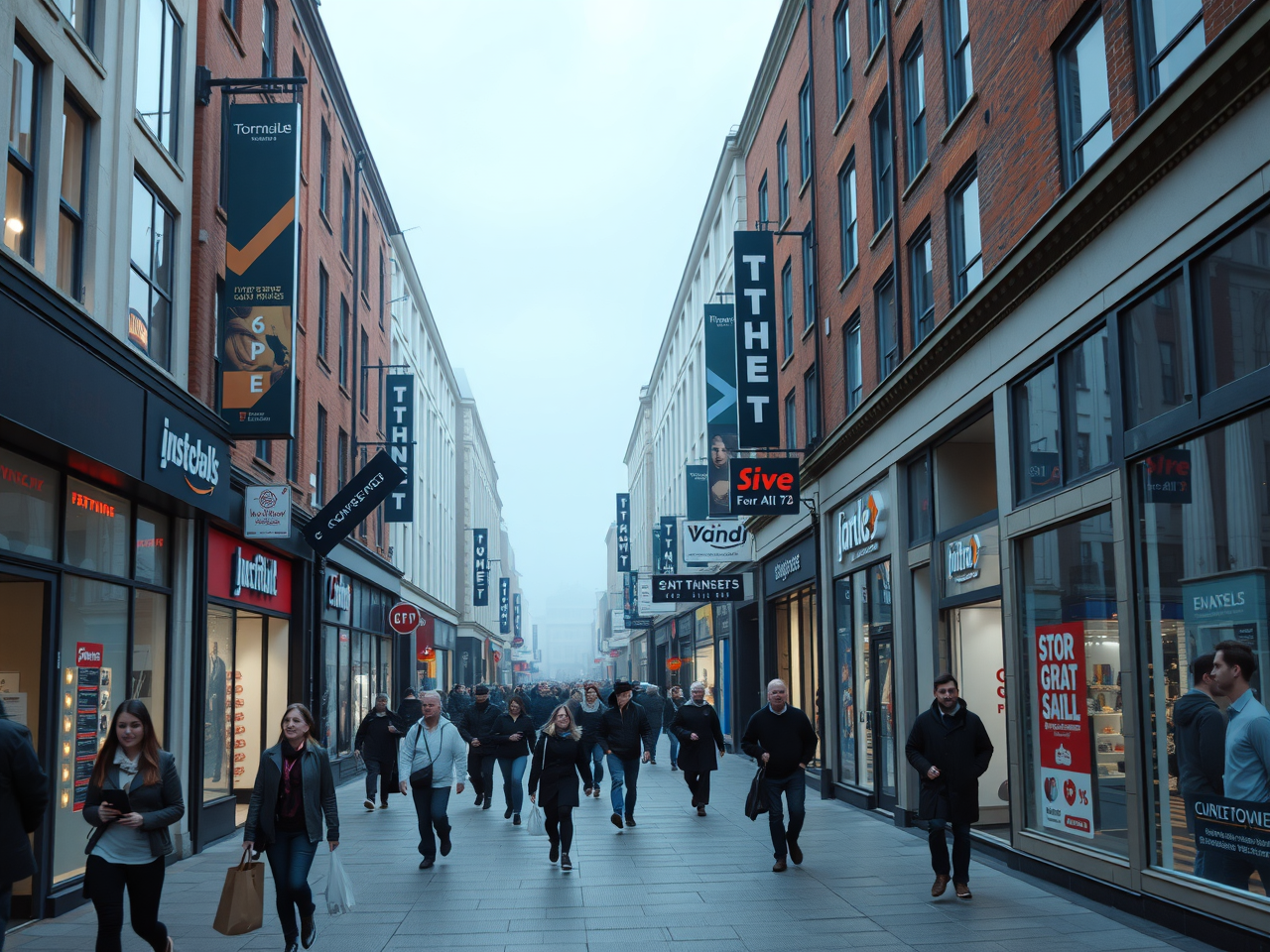
The latest UK retail data reveals shifting dynamics across various centre types, giving us valuable insights into consumer engagement and regional performance. In this Weekly Wrap, we explore trends from major retail centres to high streets, utilising advanced location analytics to drive understanding. Notably, major retail centres saw a 7.6% annual rise in footfall, underscoring their resilience in a highly competitive market.
Major Retail Centres
Major retail centres remain a cornerstone of UK retail performance. Recent data shows daily footfall rising from 69,800 in Week 13 to 77,300 in Week 16, with average dwell times clustering around 115 minutes per visit. For more detailed figures, readers can refer to the Week 16 Weekly Wrap: Footfall Trends Across UK Retail, which highlights the steady customer engagement across Scotland, Wales and England.
Local Retail Centres
Local retail centres have delivered mixed results, reflecting the diverse expectations of regional shoppers. Some areas experienced a 9.8% week‑on‑week increase, which translated into a 5.4% annual improvement with roughly 15,200 daily visitors. More comprehensive insights are available in the Week 16, 2025 Local Retail Centres Report: UK Location Analytics Insights and the Week 17 2025 Footfall Update: UK Local Retail Centres.
High Streets & Town Centres
High Streets and Town Centres are showing signs of recovery with encouraging visitor trends. Average daily footfall reached 32,000, marking a 1.9% week‑on‑week and 5.7% year‑on‑year increase, while visitors spent approximately 100 minutes per visit. The regional breakdown is fascinating with English centres outperforming their Welsh and Scottish counterparts, as detailed in both the Week 17, 2025 High Streets & Town Centres Update: Insights from Location Analytics and the Week 16 2025 High Streets & Town Centres Report: Insights from Footfall Retail Data.
Shopping Centres
The shopping centre segment presents a more nuanced picture where robust dwell times contrast with a slight decline in footfall. One report details a 9% drop in visitor numbers, with the overall average reaching 30,300 daily visitors and a commendable dwell time of about 119 minutes. Readers looking for a deeper dive may explore the UK Shopping Centres – Week 17 Performance Update 2025: Footfall Insights and the Week 16 2025 Shopping Centres: Footfall Data Insights.
Retail Parks
Retail parks have maintained overall stability despite some regional variations. An average daily visitor count stands at 18,700 with a modest week‑on‑week increase, while dwell times average at around 73 minutes. For instance, Scottish retail parks enjoyed slightly higher engagement at 83 minutes compared to their Welsh counterparts at 62 minutes, as shown in the Week 17, 2025 Retail Parks Performance Update: Location Analytics Insights.
Regional Nuances
The weekly trends highlight the importance of regional differences in understanding footfall data and consumer behaviour. While English centres often lead in visitor counts, nuanced variations in Wales and Scotland reveal opportunities for targeted strategies. This emphasises the need for both location analytics and location intelligence to tailor efforts across different UK regions, ensuring that all retail segments remain competitive in evolving market conditions.
Expert Insights
“Retail trends continue to evolve, and our use of advanced location analytics and location intelligence helps us identify precise regional shifts,” said Joe Capocci, Huq Industries Spokesperson. His comments reinforce how detailed footfall data is informing broader strategies. Retailers are increasingly leveraging these insights to refine their approaches across different centre types.
Looking Ahead
The current trends signal a vibrant future for UK retail, underpinned by both steady increases in major retail centres and mixed performances in local markets. As the competitive landscape shifts, embracing both data-driven insights and contextual analysis will be paramount. Retailers need to remain agile, employing weekly retail trends and footfall data to drive strategic adjustments.
Final Thoughts
In summary, the analysed data demonstrates that while major retail centres and high streets are on an upward trajectory, segments like shopping centres and retail parks display varied performance. Using detailed location analytics, UK retailers can pinpoint areas of opportunity and overcrowded challenges alike. The mixture of increasing footfall, improved dwell times, and regional differences presents a dynamic market that demands continual attention and adjustment, laying the groundwork for a strong retail future.
Media: For all media and press enquiries, please contact media@huq.io
About Huq Industries
Huq Industries is the leading provider of location intelligence across the UK, Europe, and the Middle East, specialising in delivering high-quality data insights on footfall, consumer behaviour, and retail performance. By leveraging advanced analytics, Huq Industries enables retailers and analysts to understand and respond to market trends effectively, ensuring they are well-equipped to navigate the changing landscape of high street and town centre commerce.
Get the latest intelligence Benchmark update each Thursday!
Sign Up NowFrequently Asked Questions
Clear answers to the most common questions about movement intelligence, retail expansion, and location analytics.
Related Blogs and Insights


.svg)
Empowering strategic teams with the world's most accurate and accessible location intelligence.
Contact

.svg)