.svg)
Week 37 2025 Shopping Centres Footfall Update
UK shopping centres show a steady recovery with a modest 5.5% weekly rise in footfall and robust footfall analytics that reflect gradual improvements.

September 25, 2025
2 min read
Table of contents
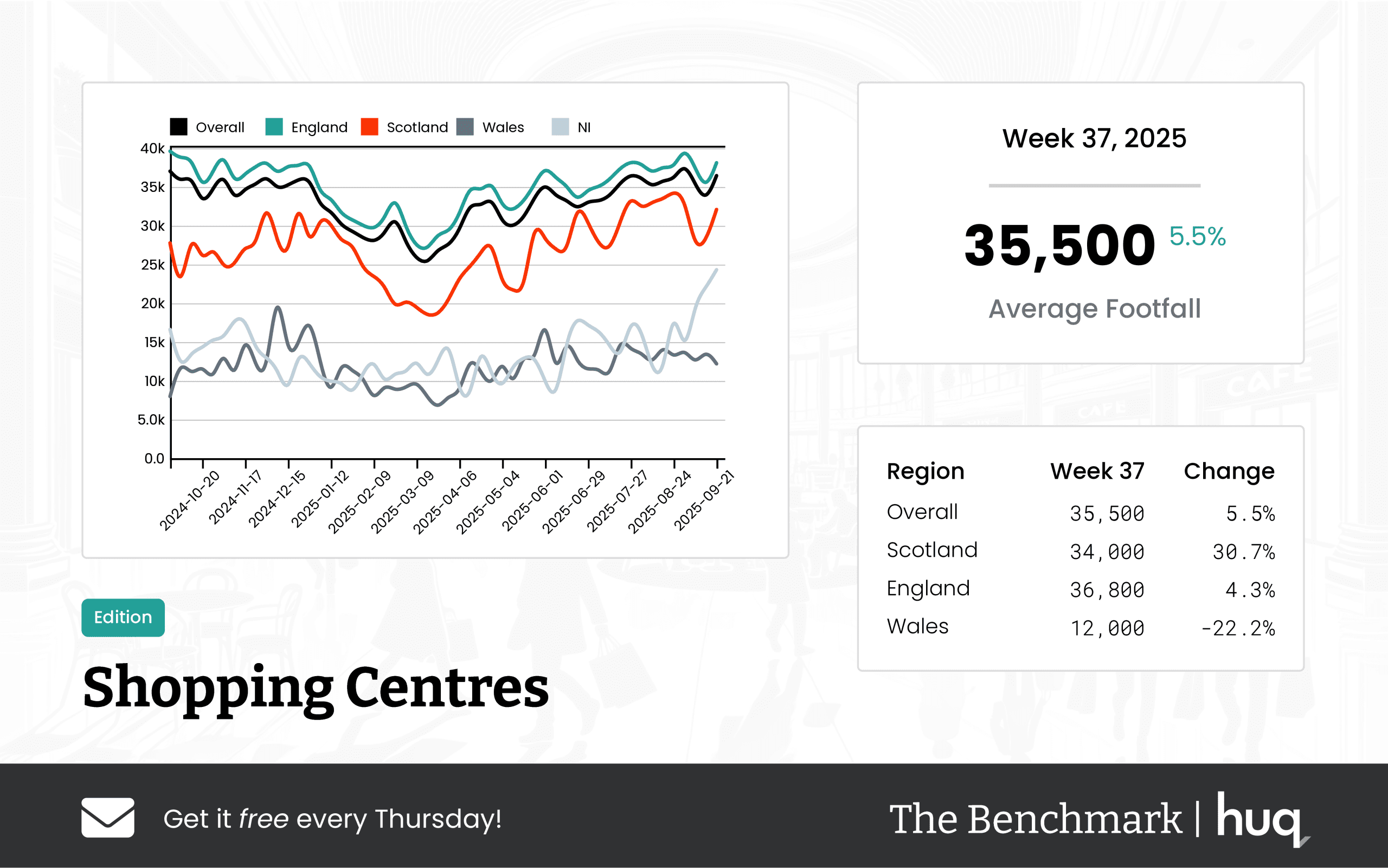
UK shopping centres are displaying encouraging signs of recovery as evidenced by the latest data from The Benchmark Tracker. The centres have recorded an average daily footfall of 35,500 visitors, marking a modest 5.5% weekly increase and a year-on-year rise of 2.1%. This steady progress underlines a cautiously optimistic retail climate with traders and analysts noting that consumer activity is gradually picking up.
A close look at regional performance further highlights the nuances of this recovery. In England, shopping centres enjoyed an average of 36,800 visitors per day. The region experienced a modest week-on-week growth of 4.3%, while year-on-year changes remain almost flat at -0.1%. Notably, visitor engagement in England is on the upswing with an increased average dwell time of 112 minutes, showing a weekly improvement of 19.1% and a robust annual gain.
Scotland, on the other hand, is witnessing a sharp surge in footfall, with centres attracting an average of 34,000 visitors daily. However, a slight decline in average visit duration suggests that while more people are visiting, the time spent per visit has decreased. Conversely, shopping centres in Wales continue to face headwinds. With an average daily footfall of just 12,000 and a significant year-on-year decline of 16.2%, Welsh centres recorded a shorter visitor dwell time of 58 minutes, compounded by further weekly and annual reductions.
In industry commentary, Joe Capocci, spokesperson for Huq Industries, remarked, "The sharp increase in Scottish footfall, as reflected in our latest results alongside retail moves such as Jo Malone’s upcoming opening at Silverburn, confirms evolving consumer engagement across key markets." This statement underscores the role of both consumer trends and strategic retail initiatives in shaping the current market landscape.
Overall, these updates provide critical insights to retailers, urban planners, and investors alike, affirming that while the recovery is steady, regional variations necessitate tailored strategies. The importance of detailed footfall analytics in directing these strategies cannot be overstated as centres adjust to evolving consumer behaviours and market conditions.
Media: For all media and press enquiries, please contact media@huq.io
About Huq Industries
Huq Industries is the leading provider of location intelligence across the UK, Europe, and the Middle East, specialising in delivering high-quality data insights on footfall, consumer behaviour, and retail performance. By leveraging advanced analytics, Huq Industries enables retailers and analysts to understand and respond to market trends effectively, ensuring they are well-equipped to navigate the changing landscape of high street and town centre commerce.
Get the latest intelligence Benchmark update each Thursday!
Frequently Asked Questions
Clear answers to the most common questions about movement intelligence, retail expansion, and location analytics.
Related Blogs and Insights


.svg)
Empowering strategic teams with the world's most accurate and accessible location intelligence.
Contact

.svg)