.svg)
Week 34 2025 UK High Streets & Town Centres: Footfall Retail Trends
UK High Streets & Town Centres saw modest increases in footfall retail with a steady 32,900 average daily visits. Footfall analytics reveal improvements below 20%, reflecting ongoing consumer engagement.

September 4, 2025
1 min read
Table of contents
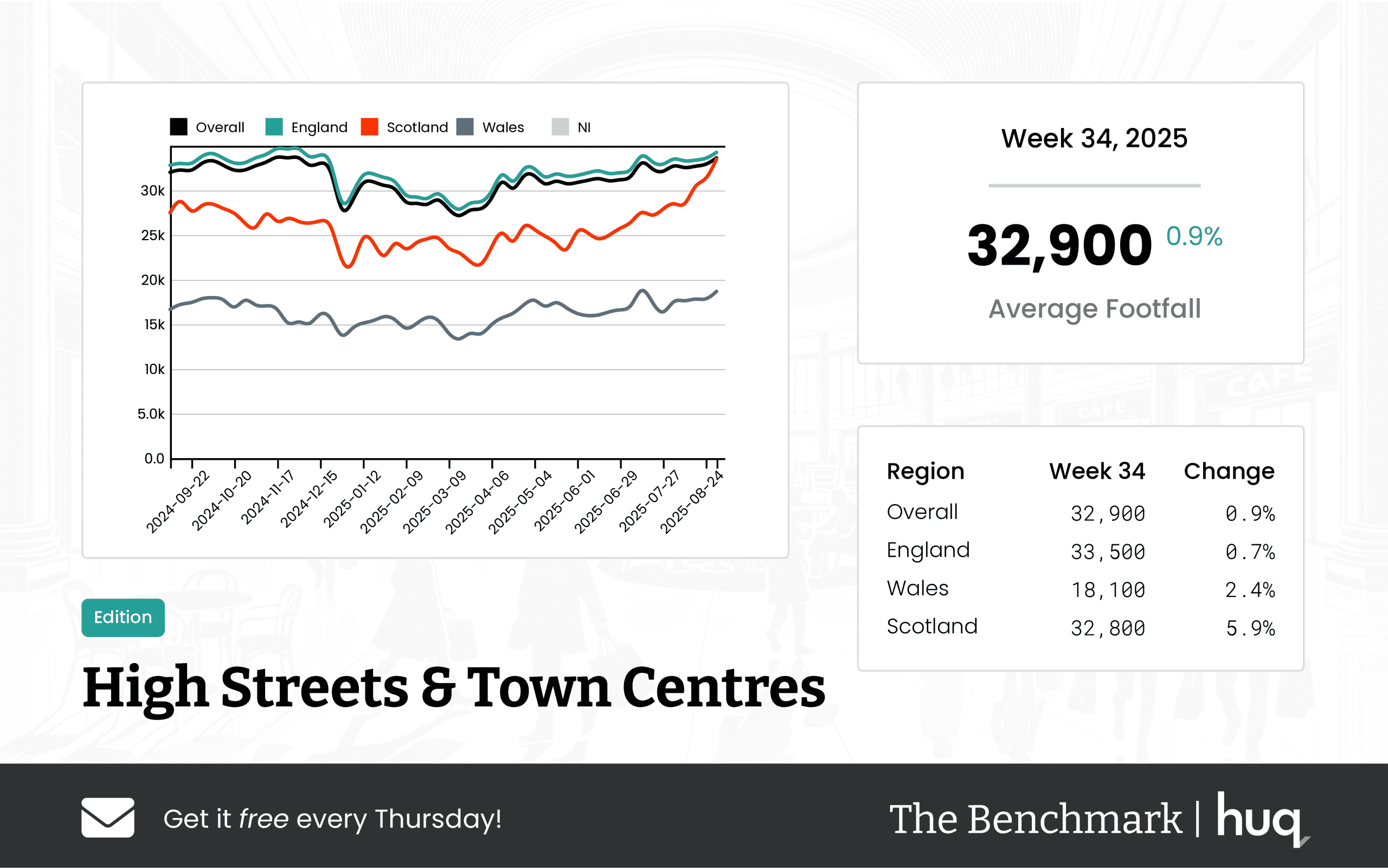
UK High Streets and Town Centres ended the week of 31 August 2025 with consistent visitor numbers and a steady average daily footfall of 32,900. This modest improvement, in line with both week-on-week and year-on-year comparisons, highlights ongoing consumer engagement in an otherwise challenging retail environment.
Regional data underscores diverse trends across the UK. In England, the numbers peaked at an average daily footfall of 33,500, with gradual gains indicating a stable patronage base. Wales, though registering a lower average of 18,100 daily visitors, still showcased a strong recent week-on-week uptick. Scotland, with a daily average of 32,800, emerged as a notable performer, exhibiting both significant week-on-week gains and a robust annual trend.
Visitor engagement remains a key highlight across all regions, with shoppers spending an average of 99 minutes on high streets and town centres. While England consistently holds this engagement time, Wales experienced a dynamic rise to 94 minutes in recent weeks, despite a year-long softening effect. Similarly, Scotland's average dwell time of 92 minutes, though slightly dipped week-on-week, still reflects an overall modest year-on-year improvement, signaling reliable and evolving footfall patterns.
Media: For all media and press enquiries, please contact media@huq.io
Frequently Asked Questions
Clear answers to the most common questions about movement intelligence, retail expansion, and location analytics.
Related Blogs and Insights



.svg)
Empowering strategic teams with the world's most accurate and accessible location intelligence.
Contact

.svg)