.svg)
Week 34 2025 Major Retail Centres – Location Analytics Performance Update
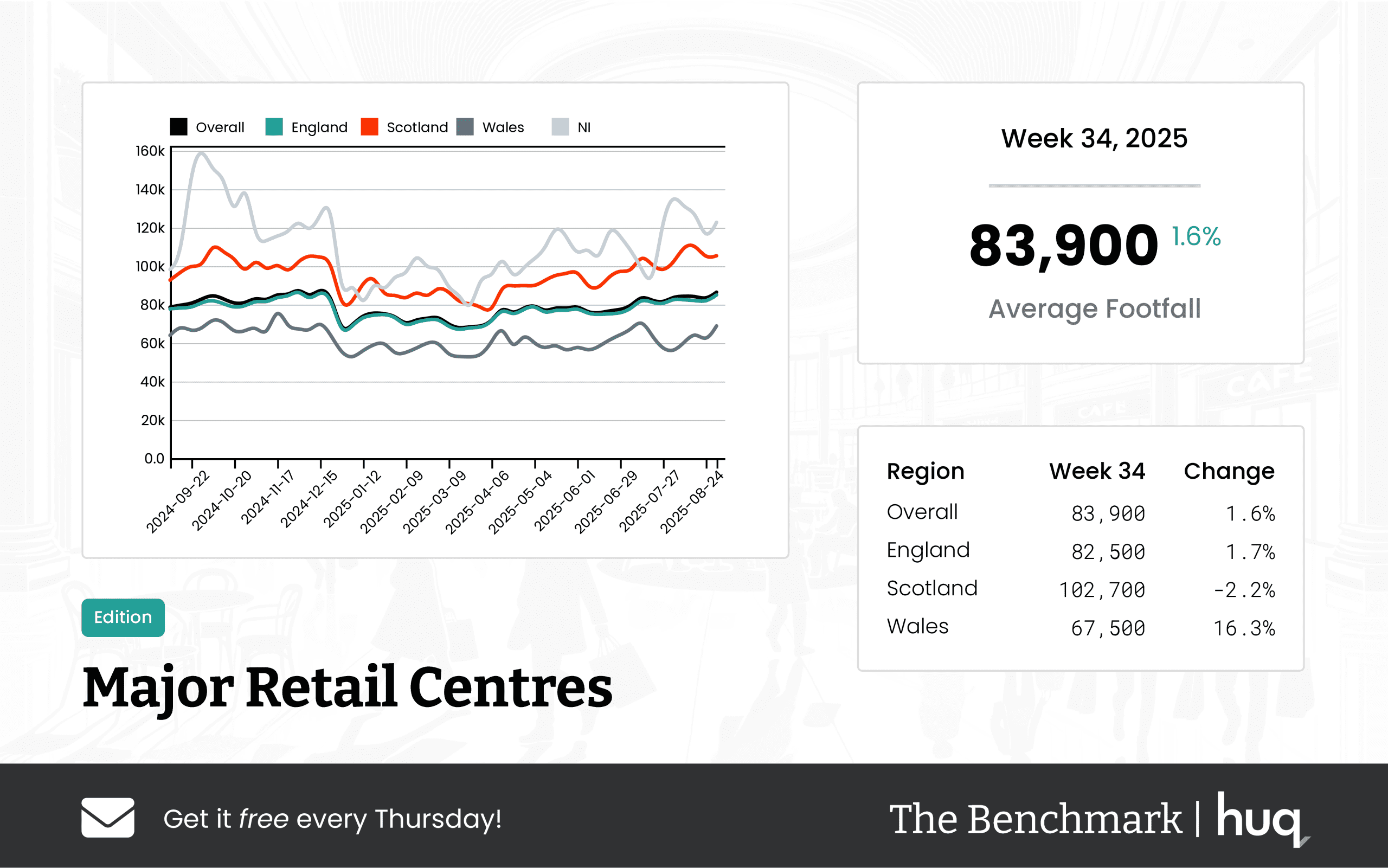
UK Major Retail Centres registered steady week 34 performance with a 1.6% rise in footfall. Robust trends in location analytics and retail trends underpin strong consumer engagement.

September 4, 2025
2 min read
Table of contents
Overall Footfall Performance
Data from the latest full week shows a strong performance across UK Major Retail Centres. The centres recorded an average daily footfall of 83,900, marking a week-on-week increase of 1.6% and a year-on-year rise of 5.3%. Such consistent footfall levels highlight enduring consumer engagement, even as niche trends in various regions evolve under the influence of location analytics.
Regional Breakdown
In England, the centres achieved an average daily footfall of 82,500, growing by 1.7% from the previous week and 5.6% compared to last year. However, visit duration in England saw a slight weekly dip of 2.6%, settling at an average of 114 minutes per visit, which nonetheless represents a 4.6% improvement on annual figures.
Scotland's performance presents an interesting contrast, with centres recording a higher average daily footfall of 102,700. Although there was a modest weekly decline of 2.2%, visitor engagement improved as reflected by an impressive week-on-week dwell time gain of 16.2%, with an average visit lasting 136 minutes. Additionally, annual performance figures show a healthy growth of 6.5%.
Welsh retail centres, on the other hand, experienced robust momentum with an average daily footfall of 67,500 and a striking weekly increase of 16.3%, despite an annual growth of only 2.1%. Further, dwell time in Wales rose by 17.4% over the week to an average of 108 minutes, even as the annual figure noted a decline of 15%.
Dwell Time Analysis
Dwell time continues to serve as a valuable indicator of consumer engagement. While England experienced a marginal drop in visitor duration over the week, the increases observed in Scotland and Wales signal a shift in consumer behaviour—spending more time in the retail environment. These emerging patterns reflect the impact of location analytics on understanding and predicting retail consumer trends.
Looking Ahead
The steady performance across these key retail centres suggests that adopting advanced location intelligence tools is paying dividends. As consumer habits continue to shift, retailers and analytics experts must leverage these insights to optimize their strategies for enhanced customer engagement and improved footfall performance across the board.
Media: For all media and press enquiries, please contact media@huq.io
Frequently Asked Questions
Clear answers to the most common questions about movement intelligence, retail expansion, and location analytics.
Related Blogs and Insights


.svg)
Empowering strategic teams with the world's most accurate and accessible location intelligence.
Contact

.svg)