.svg)
UK Shopping Centres – Week 23, 2025 Performance Update: Location Analytics Insights
UK shopping centres maintained stable performance with modest footfall increases and consistent dwell times, reflecting robust footfall performance and location analytics insights.

June 19, 2025
2 min read
Table of contents
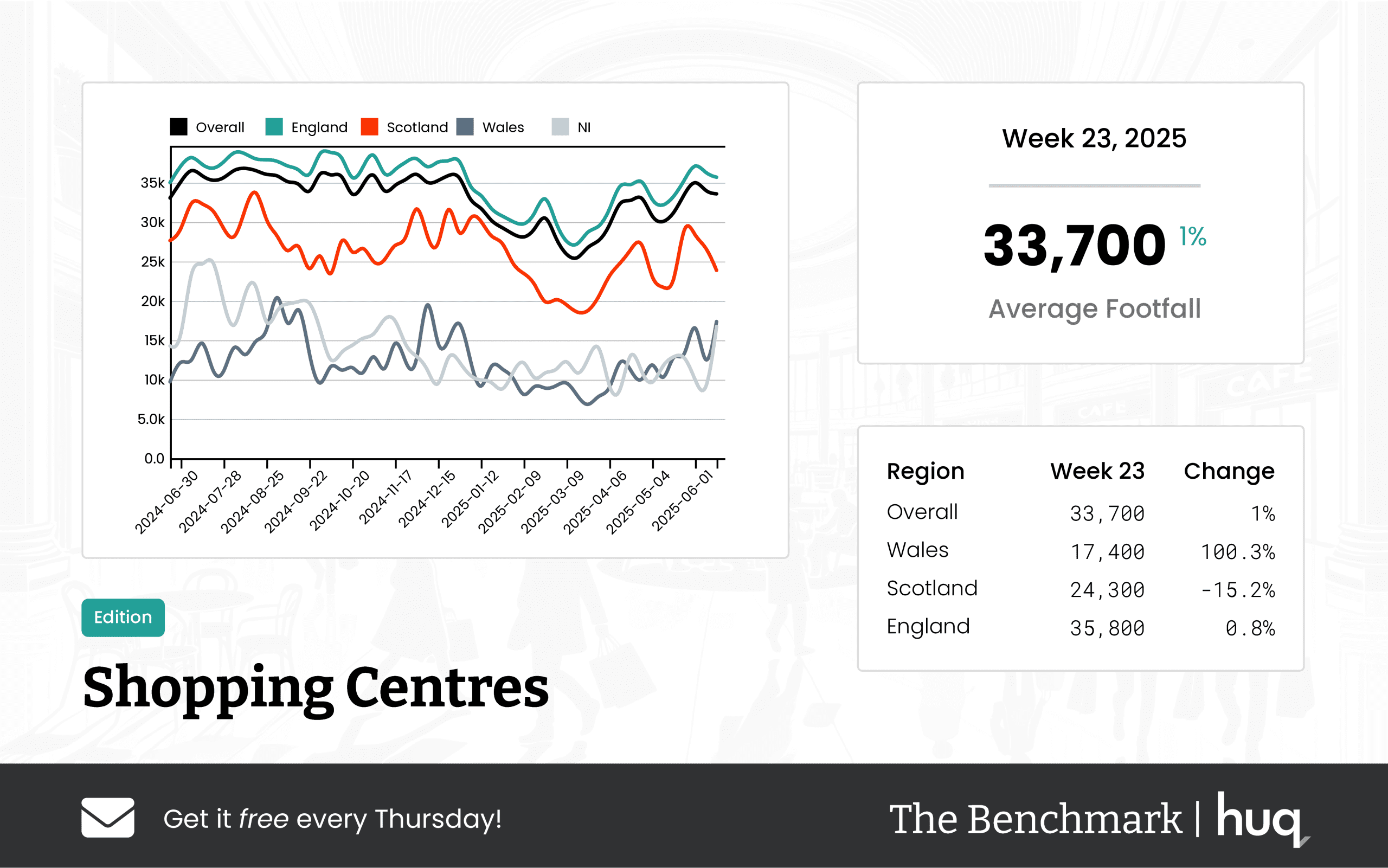
UK shopping centres have continued to perform steadily, with overall visitor numbers and dwell times reflecting a stable retail environment, even as regional variations offer deeper insights into local consumer behavior.
Overview
During the latest full week, total performance across the UK shopping centres has held nearly constant with an average daily footfall of 33,700 – a modest improvement compared to the previous week while remaining consistent with figures from the same period last year. Visitors spent an average of 116 minutes per visit. Although there was a slight weekly decline in dwell time, the yearly analysis shows that consumer engagement remains resilient.
Regional Breakdown
Wales: Exhibiting the most dramatic shifts, Welsh centres recorded an impressive average daily footfall of 17,400. This increase is significant when compared not only to the previous week but also to last year. However, this surge in visitor numbers has been accompanied by a decline in the average visit duration, which dropped to 45 minutes. The week-on-week and year-on-year falls in dwell time suggest that while more people are visiting, their engagement levels per visit are decreasing.
Scotland: Scottish shopping centres experienced a decrease in visitor activity, with an average daily footfall falling to 24,300 – a roughly 15% drop relative to the previous week. Although dwell time also dropped proportionally to 70 minutes, year-over-year metrics show more moderate fluctuations, indicating a steady yet challenged consumer engagement landscape in the region.
England: In contrast, England’s centres remained strong, achieving the highest average daily visitors at 35,800. A modest increase in weekly figures and a notable annual rise underscore improved consumer confidence and engagement. The average dwell time in England was recorded at 124 minutes, buttressed by strong location analytics data and targeted engagement strategies.
Industry Comment
Joe Capocci, spokesperson for Huq Industries, noted: "The striking increase in Welsh footfall, which aligns with recent retail industry news, highlights the evolving consumer landscape that necessitates tailored strategies to maintain engagement." This comment reflects a broader industry attention shift towards dynamic location analytics to effectively navigate and strategize in a changing retail environment.
Overall, the steady performance of UK shopping centres, despite regional disparities, reaffirms the importance of local insights in shaping consumer engagement strategies across the sector.
Media: For all media and press enquiries, please contact media@huq.io
About Huq Industries
Huq Industries is the leading provider of location intelligence across the UK, Europe, and the Middle East, specialising in delivering high-quality data insights on footfall, consumer behaviour, and retail performance. By leveraging advanced analytics, Huq Industries enables retailers and analysts to understand and respond to market trends effectively, ensuring they are well-equipped to navigate the changing landscape of high street and town centre commerce.
Get the latest intelligence Benchmark update each Thursday!
Frequently Asked Questions
Clear answers to the most common questions about movement intelligence, retail expansion, and location analytics.
Related Blogs and Insights


.svg)
Empowering strategic teams with the world's most accurate and accessible location intelligence.
Contact

.svg)