.svg)
UK Retail Parks – Week 18 2025 Performance Update: Footfall Analytics Insights
Mixed trends reveal a 0.4% decline in overall footfall with 18,600 daily visitors and a 2.7% drop in dwell time, supported by robust footfall data across the UK.

May 15, 2025
2 min read
Table of contents
Overall Footfall Performance
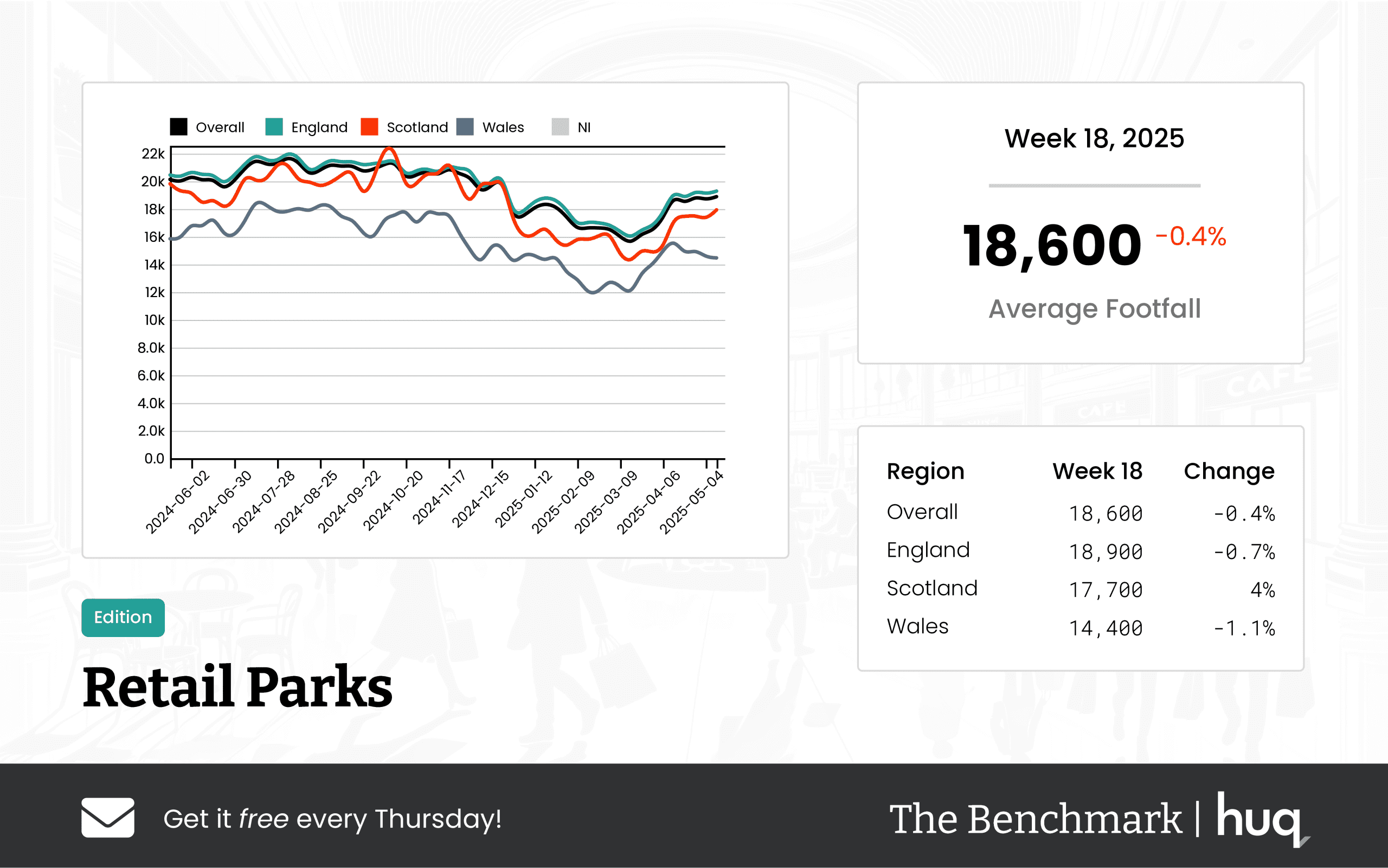
The latest figures for UK Retail Parks reveal mixed results for the period, with overall average daily footfall recorded at 18,600 – a slight week on week decline of 0.4% and an annual drop of 8.4%. Footfall analytics confirms these trends, with recent data and retail indicators underlining the market changes.
Regional Variations
The data reveals regional differences across the UK. In England, retail parks saw an average of 18,900 visitors per day, experiencing a modest week on week decline of 0.7% and an annual drop of 8%, reflecting a cautious downturn in visitor numbers. In contrast, Scotland posted a differing weekly trend with a 4% increase in footfall, although the year on year figure fell by 9.6%. Wales presents a more subdued profile, with an average of 14,400 daily visitors marking a 1.1% weekly reduction and a notably sharper annual decline of 13.2%.
Dwell Time and Visit Quality
The overall average dwell time for shoppers was 71 minutes per visit – a 2.7% decrease compared to the previous week, yet showing a marked year on year improvement of 10.9% in visit duration. In England, visitors spent an average of 72 minutes per visit, experiencing a 1.4% weekly dip accompanied by an annual improvement of 14.3%. Meanwhile, Scotland's parks recorded an average dwell time of 68 minutes, though with an 18.1% decrease over the week and a 5.6% reduction year on year. Wales recorded the lowest engagement, with visitors spending 60 minutes per visit and experiencing a consistent decrease of 3.2% both on a weekly and annual basis.
Spokesperson Commentary
Joe Capocci, spokesperson for Huq Industries, commented: "The modest weekly boost in Scotland's footfall stands out amid overall market softening, a detail that aligns with current retail industry developments such as Sandbrook Park's expansion and other structural changes."
Media: For all media and press enquiries, please contact media@huq.io
About Huq Industries
Huq Industries is the leading provider of location intelligence across the UK, Europe, and the Middle East, specialising in delivering high-quality data insights on footfall, consumer behaviour, and retail performance. By leveraging advanced analytics, Huq Industries enables retailers and analysts to understand and respond to market trends effectively, ensuring they are well-equipped to navigate the changing landscape of high street and town centre commerce.
Get the latest intelligence Benchmark update each Thursday!
Sign Up NowFrequently Asked Questions
Clear answers to the most common questions about movement intelligence, retail expansion, and location analytics.
Related Blogs and Insights


.svg)
Empowering strategic teams with the world's most accurate and accessible location intelligence.
Contact

.svg)