.svg)
UK Local Retail Centres – Week 13 Performance Update 2025: location analytics insights
UK local retail centres show mixed performance in week 13 of 2025 with a 5% rise in daily footfall and 5.4% longer dwell time, reflecting evolving location intelligence trends.

April 10, 2025
2 min read
Table of contents
UK local retail centres show mixed performance in week 13 of 2025 with a 5% rise in daily footfall and 5.4% longer dwell time, reflecting evolving location intelligence trends.
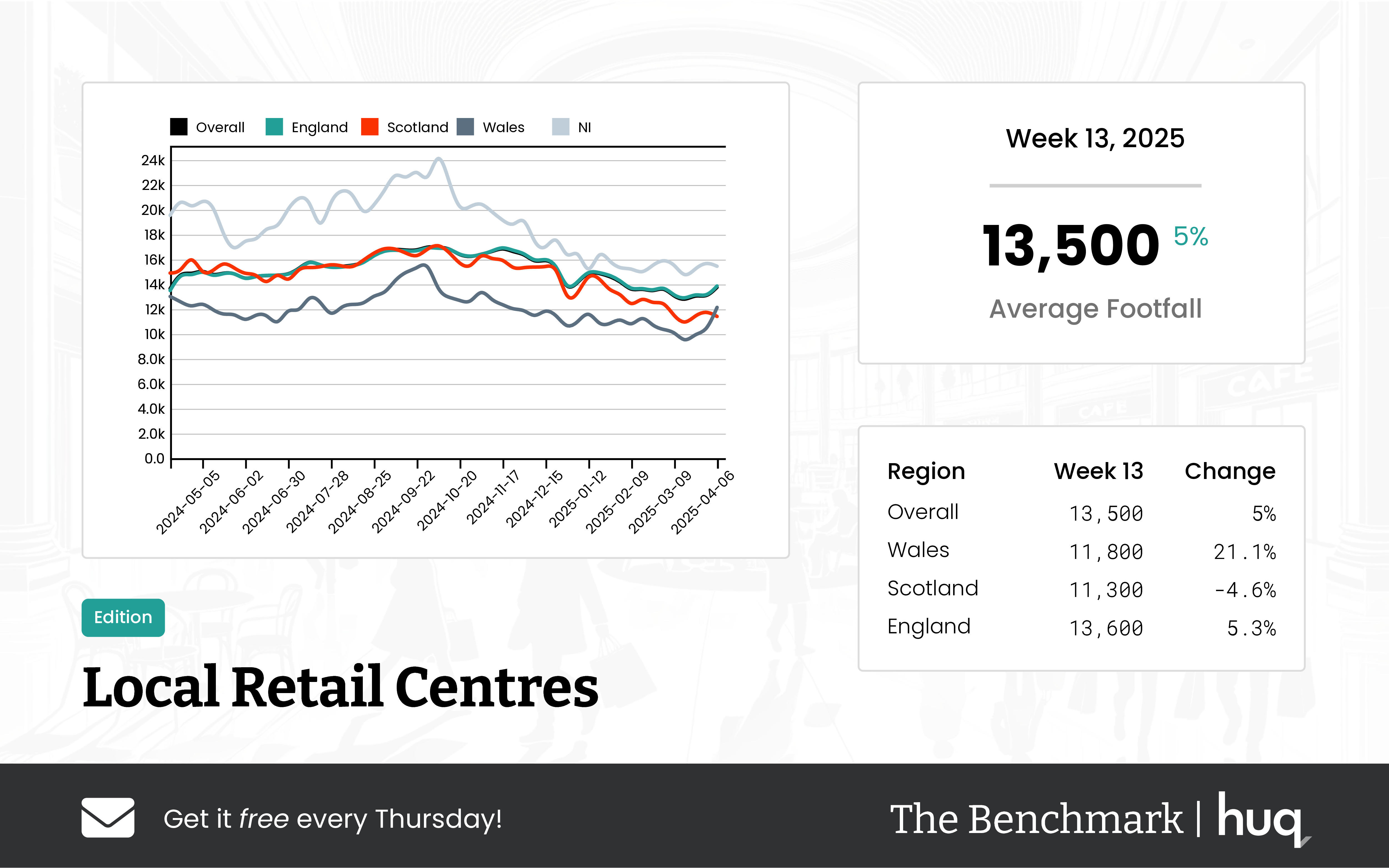
Recent data for the week ending 6 April 2025 highlights a mixed bag of short-term gains and longer term challenges across UK local retail centres, underpinned by strong location analytics. Centres recorded an average daily footfall of 13,500, marking a modest 5% improvement compared with last week, although overall footfall remains lower than the previous year with a 6.6% decline. Visitors spent an average of 98 minutes at these centres, with dwell time rising by 5.4% on a week-on-week basis and showing a sharp year-on-year increase, offering valuable location intelligence.
Regional Breakdown
Wales
In Wales, local centres welcomed an average of 11,800 daily visitors. This region experienced a sharp increase in footfall compared with the previous week, despite a moderate decline of 6.3% against last year's figures. Visitors spent an average of 91 minutes per visit, with dwell time showing a sharp weekly increase; these trends offer location intelligence.
Scotland
In Scotland, centres recorded an average of 11,300 daily visitors. Footfall fell modestly over the week and compared less favourably with the same period last year while visit duration stood at 80 minutes, reflecting a moderate week-on-week decline despite a small year-on-year rise. These figures contribute to a growing sense of location intelligence in UK retail performance.
England
In England, local retail centres recorded a healthy average daily footfall of 13,600 with a 5.3% increase over the week, although their yearly performance softened by the same margin. The average visit duration was 99 minutes, showing positive progress both week-on-week and over the longer term. Such trends further reinforce location intelligence emerging from regional performance.
Industry Comment
Commenting on these findings, Joe Capocci, Huq Industries spokesperson, stated: "Our most striking change in footfall was observed in Wales, a trend that resonates with industry developments seen in recent retail news such as the ghost shopping centre story."
Media: For all media and press enquiries, please contact media@huq.io
About Huq Industries
Huq Industries is the leading provider of location intelligence across the UK, Europe, and the Middle East, specialising in delivering high-quality data insights on footfall, consumer behaviour, and retail performance. By leveraging advanced analytics, Huq Industries enables retailers and analysts to understand and respond to market trends effectively, ensuring they are well-equipped to navigate the changing landscape of physical commerce with our flagship lighthouse platform.
Looking for intelligence on specific locations? Explore the lighthouse platform.
Frequently Asked Questions
Clear answers to the most common questions about movement intelligence, retail expansion, and location analytics.
Related Blogs and Insights


.svg)
Empowering strategic teams with the world's most accurate and accessible location intelligence.
Contact

.svg)