.svg)
Major Retail Centres Week 40, 2024: Northern Ireland Sees Strong Growth
Huq Industries’ footfall data for the week ending October 6, 2024, reveals nuanced trends in retail centre visitation across the UK, highlighting regional variations in footfall, dwell time, and weekday visitation.

January 9, 2025
2 min read
Table of contents
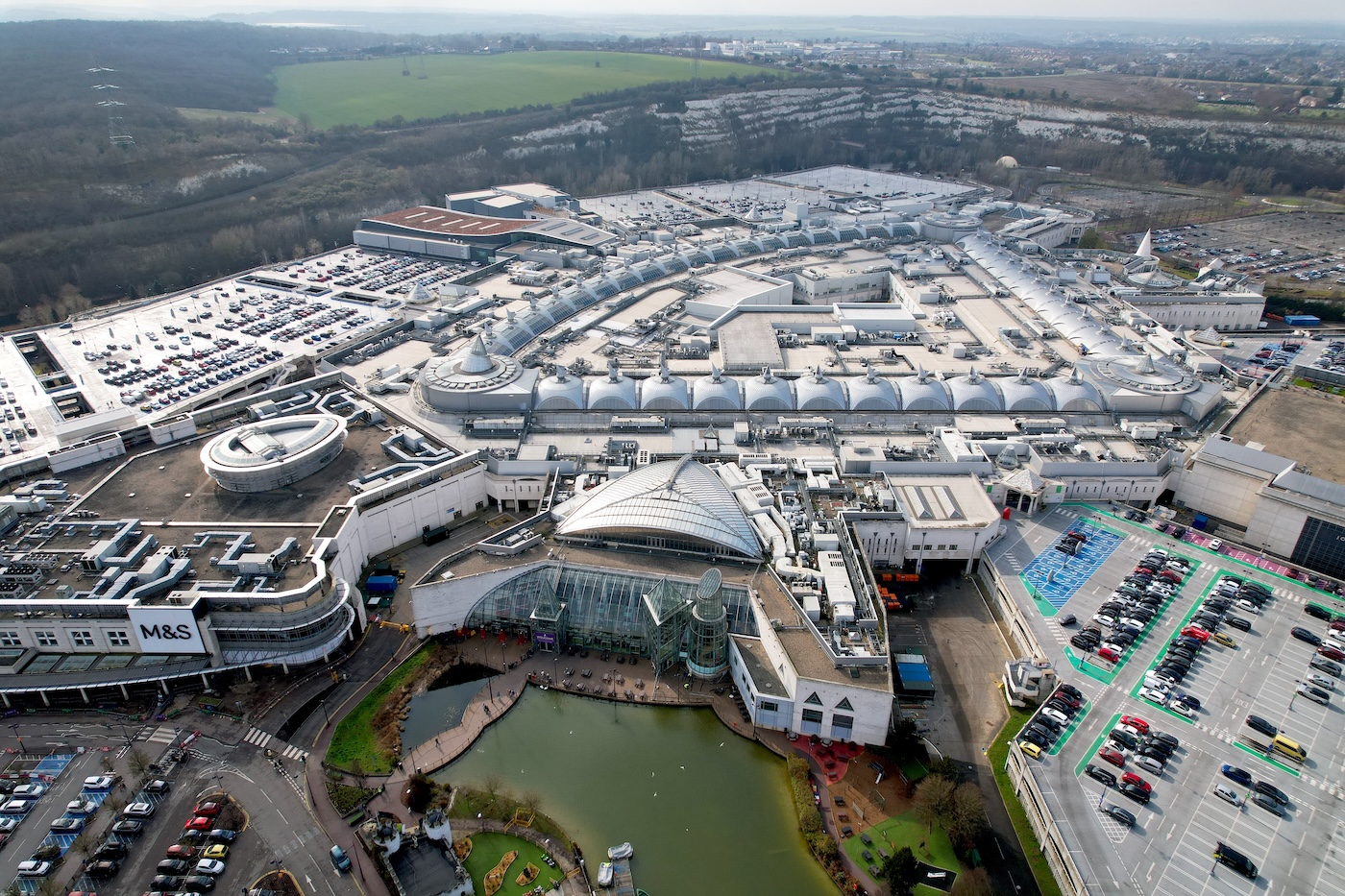
Huq Industries’ footfall data for the week ending October 6, 2024, reveals nuanced trends in retail centre visitation across the UK, highlighting regional variations in footfall, dwell time, and weekday visitation. The data, encompassing over 2,700 retail centres, shows a mixed landscape of consumer behaviour in different areas.
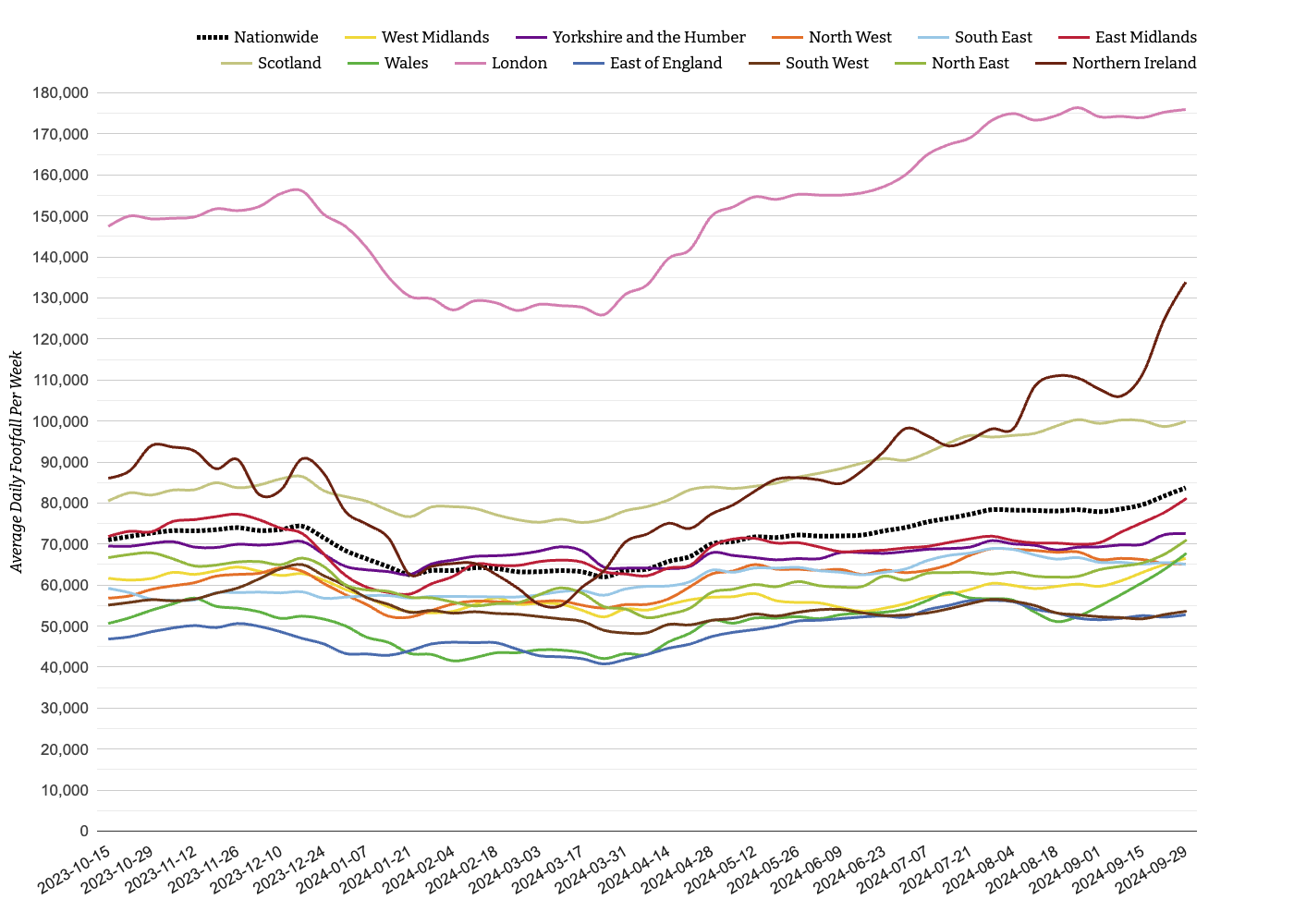
Major Retail Centres Daily Footfall
Regional Analysis
In the South East, the average daily footfall slightly decreased week on week but continues a positive trend year on year. Dwell time in this region however increased compared to the same week last year.
The East Midlands experienced a boost in footfall and dwell time as did Northern Ireland.
London, a major hub for retail, saw a strong increase in footfall year on year, although dwell time decreased slightly week on week. The average dwell time still showed a strong annual increase.
Location Intelligence Insights
huq’s location intelligence analytics highlight specific retail centres that have seen notable changes. St Albans in the East of England, Wigan in the North West, and Barnsley in Yorkshire and the Humber were among the top performers with the highest increases in visitation. Conversely, centres like Croydon in London, Wrecsam in Wales, and Stoke in the West Midlands experienced the steepest declines.
Market Outlook
Based on the direction of the latest data and trends from the previous year, the coming four weeks are likely to see continued growth in regions like Northern Ireland. However, areas with recent declines may face challenges unless strategic changes are implemented. This forward-looking analysis by huq provides essential insights for retailers and commercial real-estate companies, helping them adapt to evolving market dynamics.
Partner with huq
Track consumer footfall and spend dynamics across your store network using huq data and compare to your own sales data. Gain insights into crucial questions such as ‘are we out-performing the market’, ‘where are our similar locations for new store growth’, and ‘how healthy is this retail centre’.
If you are interested in basing your location insights to actual consumer behaviour then please connect with our team.
Frequently Asked Questions
Clear answers to the most common questions about movement intelligence, retail expansion, and location analytics.
Related Blogs and Insights


.svg)
Empowering strategic teams with the world's most accurate and accessible location intelligence.
Contact

.svg)