.svg)
Local Retail Centres Footfall Report: Week 51 2024
Recent data from Huq Industries reveals nuanced trends in footfall, dwell time, and weekday visitation across various UK regions in local retail centres as of the week ending December 21, 2024.

January 9, 2025
2 min read
Table of contents
Recent data from Huq Industries reveals nuanced trends in footfall, dwell time, and weekday visitation across various UK regions in local retail centres as of the week ending December 21, 2024. These subtle yet significant shifts reflect the evolving consumer behaviour in these areas.
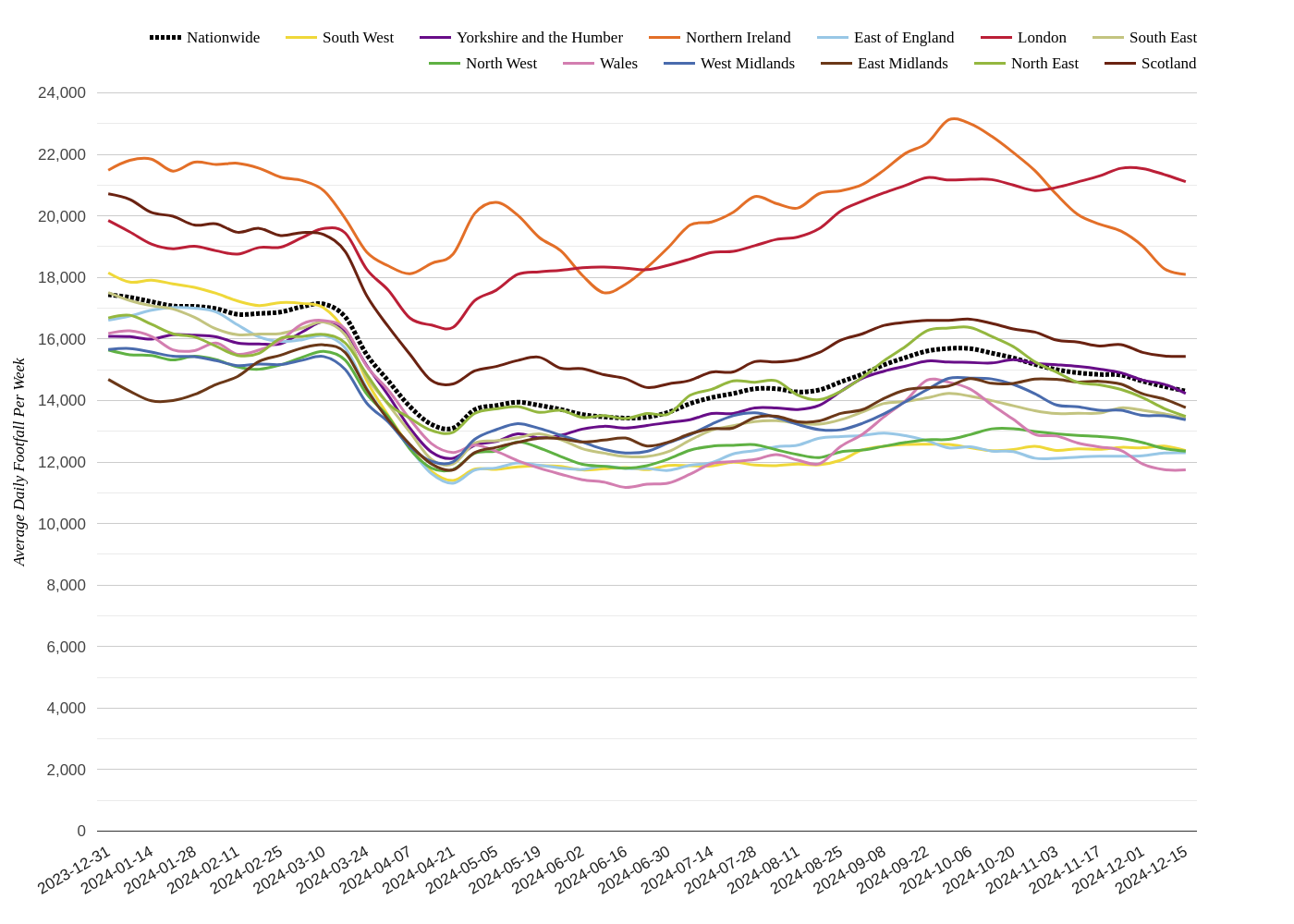
Local Retail Centres Daily Footfall
Footfall Data Analysis
In terms of footfall, most regions have experienced a slight decrease compared to the previous week, with the South West showing the most significant drop. However, London stands out with a slight increase in footfall year on year, suggesting a resilient consumer base in the capital. This footfall report highlights the dynamic nature of consumer movements and the importance of monitoring these trends closely.
Dwell Time Insights
Dwell time, which indicates how long visitors stay within the centres, has seen an increase in several regions. Notably, the South East and Wales have reported substantial increases in average visit dwell time compared to the same period last year, highlighting a greater engagement level among shoppers. This aspect of footfall statistics provides valuable insights into consumer engagement and shopping behaviour.
Weekday Visitation Analysis
Weekday visitation shares, which measure the proportion of visits occurring during working weekdays, have remained relatively stable across most regions. This stability suggests a consistent pattern in how consumers are choosing to shop during the week, underlining the importance of location intelligence analytics in understanding market trends.
Market Outlook
Looking ahead, the direction of the latest data and trends from the same period last year suggest that footfall in local retail centres may continue to experience subtle shifts. Retailers and commercial real-estate companies should monitor these trends closely, utilising location intelligence data to adapt to the evolving market conditions. This forward-looking analysis is crucial for strategic planning and optimisation of retail operations.
Partner with huq
Track consumer footfall and spend dynamics across your store network using huq data and compare to your own sales data. Gain insights into crucial questions such as ‘are we out-performing the market’, ‘where are our similar locations for new store growth’, and ‘how healthy is this retail centre’.
If you are interested in basing your location insights to actual consumer behaviour then please connect with our team.
Frequently Asked Questions
Clear answers to the most common questions about movement intelligence, retail expansion, and location analytics.
Related Blogs and Insights


.svg)
Empowering strategic teams with the world's most accurate and accessible location intelligence.
Contact

.svg)