.svg)
High Streets & Town Centres Footfall Report: Week 51 2024
Recent footfall data from Huq Industries reveals nuanced trends in footfall, dwell time, and weekday visitation across various UK regions for High Streets and Town Centres as of the week ending December 21, 2024.

January 9, 2025
2 min read
Table of contents

Recent footfall data from Huq Industries reveals nuanced trends in footfall, dwell time, and weekday visitation across various UK regions for High Streets and Town Centres as of the week ending December 21, 2024. This footfall report highlights a slight increase in average daily footfall in the West Midlands, with a 0.1% week-on-week change and a 5% increase compared to the last 12 months. In contrast, Wales experienced a notable decrease in footfall, with a 28.2% drop year-on-year.
High Streets & Town Centres Daily Footfall
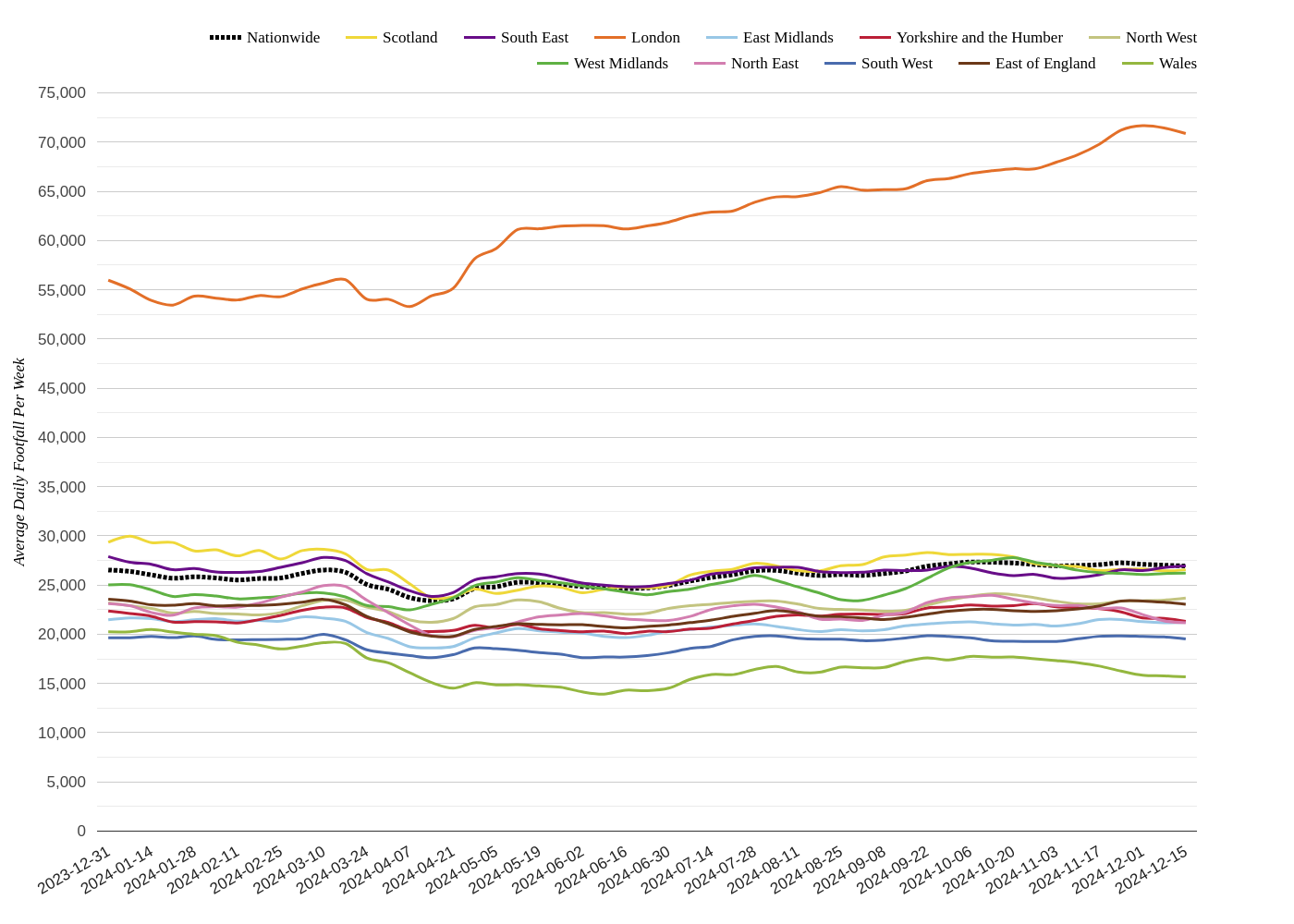
Dwell time, a key metric in footfall statistics, showed significant increases in regions like Yorkshire and the Humber, where the latest week recorded a 27.8% increase year-on-year. London also saw a 23.4% increase in dwell time compared to the previous year, indicating varied consumer behaviours across different regions, potentially influenced by local economic conditions and seasonal events.
The footfall data also highlights changes in the proportion of visits during working weekdays. The West Midlands saw a notable increase in this metric, with a 9% rise year-on-year, indicating a possible shift in consumer shopping habits towards the earlier part of the week.
Overall, the footfall report from huq provides valuable insights into the dynamics of retail activity across the UK, helping businesses and policymakers understand regional consumer trends and adapt strategies accordingly. The location intelligence data included in this report is crucial for retail planning and strategy development, especially in understanding how different regions are performing in terms of footfall retail metrics.
Partner with huq
Track consumer footfall and spend dynamics across your store network using huq data and compare to your own sales data. Gain insights into crucial questions such as ‘are we out-performing the market’, ‘where are our similar locations for new store growth’, and ‘how healthy is this retail centre’.
If you are interested in basing your location insights to actual consumer behaviour then please connect with our team.
Frequently Asked Questions
Clear answers to the most common questions about movement intelligence, retail expansion, and location analytics.
Related Blogs and Insights


.svg)
Empowering strategic teams with the world's most accurate and accessible location intelligence.
Contact

.svg)