
Retail location planning
·
Retail location planning across Benelux
Plan openings, moves and closures in the Netherlands, Belgium and Luxembourg with weekly footfall and catchment data for any address.
What's in your free analysis
Trusted by 300+ organisations · Data across 35 markets





Get a free analysis of your locations
Up to 5 locations. No cost, no commitment.
Retail location planning in Benelux means planning for three countries that sit very close together. Huq gives retail teams weekly footfall, catchment and competitor data for any address in the Netherlands, Belgium and Luxembourg. Compare city centres, shopping streets and shopping centres on one map. Then decide where to open, move or close stores, with one dataset that works the same way on both sides of each border.
How Huq supports retail location planning
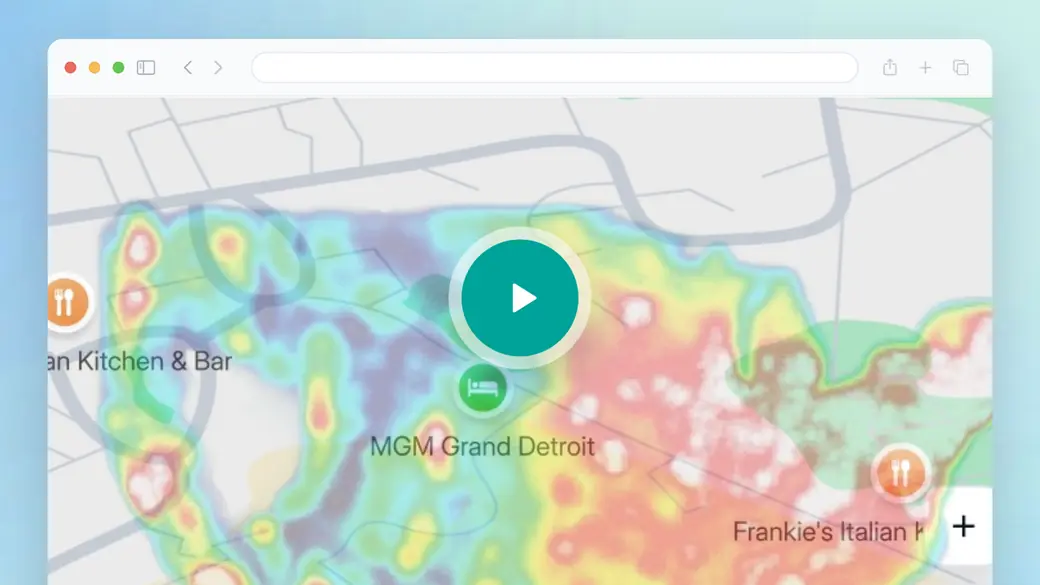
The video is a general tour of Huq. For a network review, look at three things. See how the Explore map draws travel-time catchments around any site, also near a border. See how footfall trends compare between cities and streets. And see how Projects hold a full store list for regular reviews.
- Draw travel-time catchments around any site, including sites close to a border.
- Compare footfall on shopping streets in Dutch and Belgian cities side by side.
- Track your stores and candidate sites in Projects, and export them to CSV or Excel.
What is retail location planning?
Retail location planning is how a retailer decides where its stores should be. It covers new openings, relocations, closures and format changes. It looks at the whole network, not one site at a time.
In Benelux the network is dense. Many cities are less than an hour apart, and shoppers cross borders between the Netherlands, Belgium and Luxembourg. So catchments overlap. A new store in Antwerp may draw some of the same shoppers as a store in Breda. Good planning measures that overlap before you sign a lease.
Huq gives you the data for this, not a sales forecast. You get the same measures in every Benelux country: footfall for any address, catchments by postcode, cross-visitation between sites and competitor brand locations. Published accuracy is 15.7% MAPE in the Netherlands and 17.0% in Belgium.
What's in your retail location planning analysis
01
Footfall for any address
Weekly footfall, trends and period-on-period change for your stores, competitor stores and sites you have not opened.
02
Catchments across borders
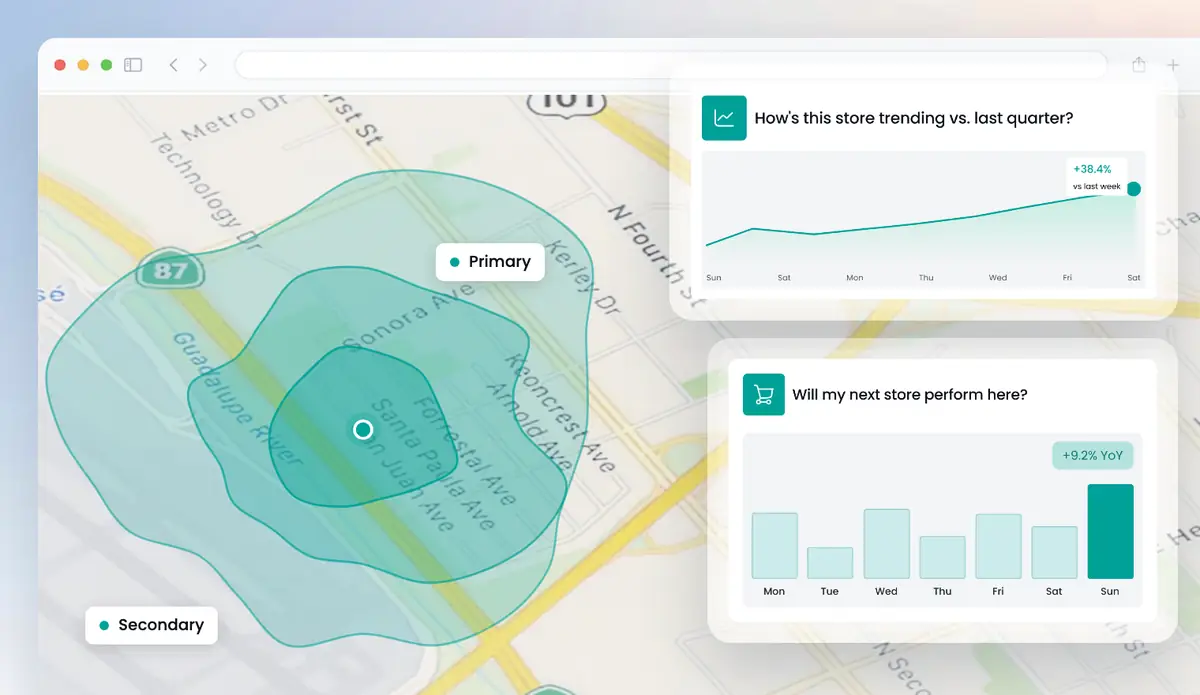
Postcode catchments and travel-time areas, including catchments that reach across a national border.
03
Overlap between your stores
Cross-visitation between up to 10 location pairs shows where your stores share the same customers.
04
Competitor brand locations
See which brands trade near each site in city centres, on shopping streets and in shopping centres.
What a Benelux location plan shows
Three views that help network teams plan stores across the Netherlands, Belgium and Luxembourg.

01
Your whole network on one map
See your stores, competitor brand locations and shopping centres in all three countries on the Explore map, with catchment and travel-time layers.

02
Footfall by city and street
Compare weekly footfall and trends between city centres and shopping streets, so you can see which locations are gaining and which are losing.
03
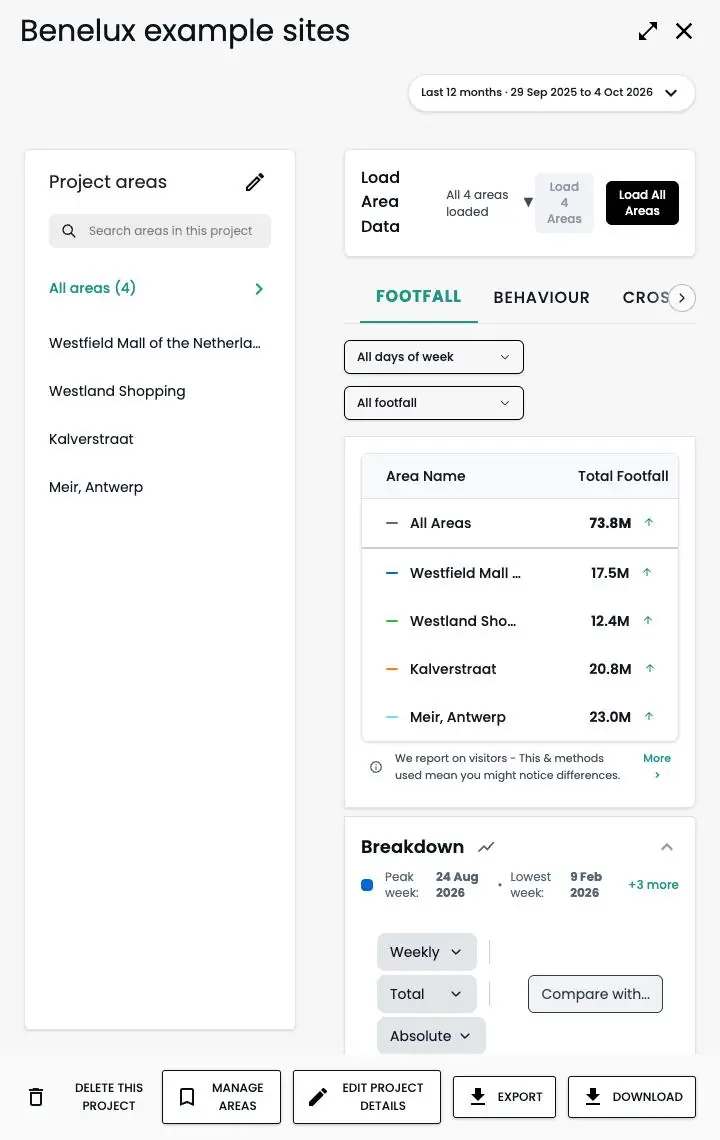
Projects for network reviews
Keep stores and candidate sites in Projects, track their status, and share monthly PDF reports or CSV and Excel exports with your team.
Retail location planning in the Netherlands, Belgium and Luxembourg
How it works
Step 1
Tell us your locations
Add up to five addresses in the form. Your own stores, candidate sites or competitors.
Step 2
We run the analysis
Our team maps each location from observed visitor data.
Step 3
We walk you through it
A short call to take you through what the data shows and what it means for you.
Why retailers use Huq for retail location planning in Benelux
Who it's for
01
02
03
Frequently asked questions
What does retail location planning cover?
Retail location planning is the process of deciding where a retailer's stores should be. It covers openings, relocations, closures and format changes across the whole network. The aim is a set of stores that reaches your customers well without stores competing with each other for the same shoppers.
How do retailers decide where to open a new store?
They look at demand first: footfall around the site and the size of its catchment. Then they check competitors nearby and how much the catchment overlaps with their existing stores. Huq shows all of this for any address in Benelux, on one map, with weekly data.
How do you plan stores near the Dutch-Belgian border?
Treat the border as part of the catchment, not its edge. Draw travel-time catchments in km around each site and see which postcodes on both sides they reach. Then check cross-visitation with your nearby stores. Huq uses the same data in the Netherlands, Belgium and Luxembourg, so the comparison is like for like.
Can Huq tell me whether a store should relocate?
Huq won't make the call, but it shows the evidence. Compare footfall trends at the current store with nearby alternatives, check how each catchment overlaps with your other stores, and see which competitors trade around each option. Your team then weighs that against rent and lease terms.
Which Benelux locations does Huq cover, and how often is the data updated?
Huq covers any address in Belgium, the Netherlands and Luxembourg, including competitor stores and sites you have not opened. No counters or sensors are needed. Data refreshes weekly, and Huq manually validates more than 1,000 locations in each of its 35 markets twice a year.
What is in the free location planning analysis?
Share a few stores and the cities or sites you are reviewing. Huq will send back footfall, catchment and cross-visitation data for them. Start with stores you know well. Then you can check the numbers against your own experience before you decide anything.
Questions? Talk to us
Book a demoAbout Huq
Huq is a location intelligence company. We turn anonymised mobile location data into footfall, catchment and visitor insight for any place, so retailers, property owners and local authorities can make decisions on evidence.
See how your locations really perform
Up to 5 locations. No cost, no commitment.