.svg)
Week 9, 2025 UK Shopping Centres Update: Insights from Location Analytics
Recent data reveal a subtle 5% dip in footfall alongside improved engagement. Location analytics highlight evolving footfall trends that shape the overall retail experience.

March 13, 2025
2 min read
Table of contents
Recent data reveal a subtle 5% dip in footfall alongside improved engagement. Location analytics highlight evolving footfall trends that shape the overall retail experience.
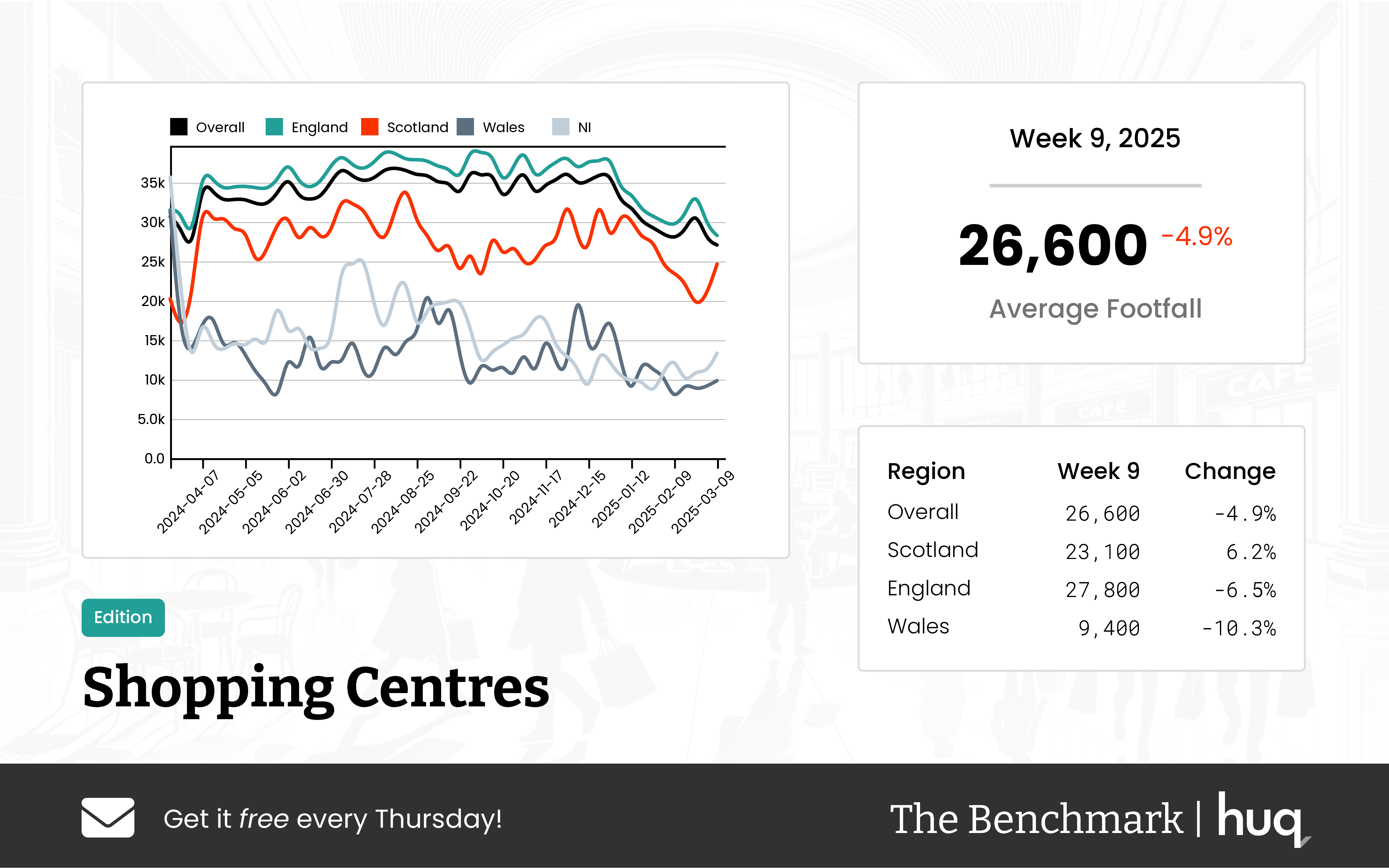
The latest update from The Benchmark leverages cutting-edge location analytics to provide refined insights into retail performance across UK shopping centres. For the week ending 2025-03-09, centres recorded an average daily footfall of 26,600—a slight 5% week-on-week dip and lower numbers compared with the previous year. Yet there's a silver lining; overall visit duration improved, averaging 117 minutes per visit, underlining enhanced visitor engagement.
Scottish shopping centres stood out with an average of 23,100 visitors each day. While the weekly data indicated a modest increase, the year-over-year figures reveal a significant boost. The average dwell time in Scottish centres was recorded at 90 minutes per visit, albeit showing a slight softening compared with both the previous week and the past year.
In England, the average daily footfall reached 27,800. Despite this, centres experienced a weekly decline and overall footfall remains below last year's figures. Notably, visit duration in English centres nudged upwards to an average of 120 minutes, bolstered by slight week-on-week improvements and a robust year-on-year growth in dwell time.
In contrast, Welsh centres recorded an average of just 9,400 visitors daily. Both weekly trends and year-on-year analysis indicate noticeable declines in visitor numbers. Although there was a slight uptick in visit duration to an average of 54 minutes, this figure still marks a considerable downturn compared with previous periods.
The evolving trends in dwell time, alongside improvements in overall visit duration, underscore a shift in the retail experience. Even as visitor numbers cooled, these metrics reflect a deeper engagement and a more qualitative shopping experience.
Joe Capocci, spokesperson for Huq Industries, commented on the data: "The sharp increase in Scottish footfall alongside observations in current retail industry developments underlines the need for agile strategies based on our latest data."
Media: For all media and press enquiries, please contact media@huq.io
About Huq Industries
Huq Industries is the leading provider of location intelligence across the UK, Europe, and the Middle East, specialising in delivering high-quality data insights on footfall, consumer behaviour, and retail performance. By leveraging advanced analytics, Huq Industries enables retailers and analysts to understand and respond to market trends effectively, ensuring they are well-equipped to navigate the changing landscape of high street and town centre commerce.
Get the latest intelligence Benchmark update each Thursday!
Frequently Asked Questions
Clear answers to the most common questions about movement intelligence, retail expansion, and location analytics.
Related Blogs and Insights


.svg)
Empowering strategic teams with the world's most accurate and accessible location intelligence.
Contact

.svg)