.svg)
UK Shopping Centres – Week 41 2025 Performance Update with Location Analytics
UK shopping centres experienced a 2% weekly decline and a 4.7% annual dip, while evolving consumer trends and location intelligence highlight shifting dynamics across regions.

October 23, 2025
2 min read
Table of contents
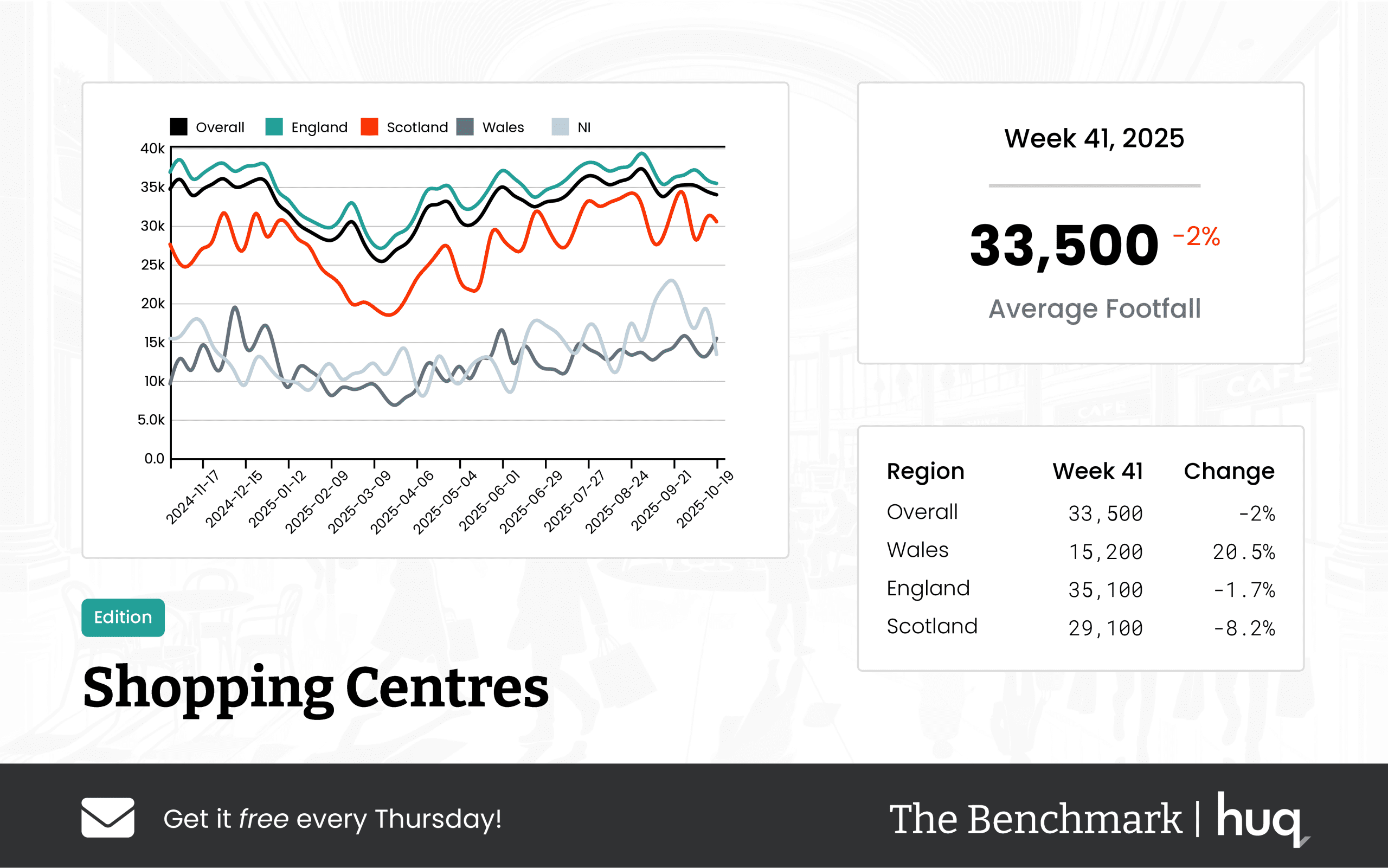
UK shopping centres are experiencing a period of modest softness, as the latest weekly data from The Benchmark indicates an average daily visitor count of 33,500 during Week 41. Overall, the centres saw a weekly decline of 2% and a year-on-year decline of 4.7%, signalling evolving consumer behaviours amid changing retail conditions.
Overview
The most recent figures reveal that despite the overall decrease in footfall, regional performance varies significantly. Location analytics and location intelligence are playing critical roles in interpreting these trends and understanding market dynamics.
Regional Performance
In England, shopping centres recorded an average of 35,100 daily visitors. Although there was a slight week-on-week decline of 1.7%, the annual figures showed a more significant decrease of 7%. In Scotland, centres counted an average of 29,100 visitors each day, with a sharper weekly decline of 8.2% but an impressive year-on-year increase of 15.6%, suggesting that the market may be poised for gradual recovery. Wales, meanwhile, continues to differentiate itself with 15,200 daily visitors, alongside a noticeable bounce in both weekly and annual performance compared to previous trends.
Dwell Time
The average visit duration across the UK stood at 105 minutes, marking a modest weekly increase of 4%, even as the annual figures slipped by 3.7%. English centres reported an average dwell time of 106 minutes per visit, reflecting a weekly gain of 3.9% even though there was a 5.4% decline over the year. Scottish centres maintained an average duration of 101 minutes, bolstered by an impressive 17.4% year-on-year improvement, indicative of stronger consumer engagement. Conversely, Welsh centres experienced shorter visits, with an average dwell time of only 20 minutes, registering significant declines in both weekly and annual metrics.
Spokesperson Comment
Joe Capocci, the spokesperson for Huq Industries, remarked, "The sharp increase in Welsh footfall, alongside notable retail industry headlines such as the recognition of a Scottish shopping centre, underlines evolving consumer dynamics across regions. This shifting landscape emphasizes the importance of leveraging location analytics and intelligence to adapt to consumer needs and regional particularities."
This update provides a snapshot of the steering influences in the UK retail market, highlighting the importance of regional variations and the role of data-driven insights in navigating the modern shopping experience.
Media: For all media and press enquiries, please contact media@huq.io
About Huq Industries
Huq Industries is the leading provider of location intelligence across the UK, Europe, and the Middle East, specialising in delivering high-quality data insights on footfall, consumer behaviour, and retail performance. By leveraging advanced analytics, Huq Industries enables retailers and analysts to understand and respond to market trends effectively, ensuring they are well-equipped to navigate the changing landscape of high street and town centre commerce.
Get the latest intelligence Benchmark update each Thursday!
Frequently Asked Questions
Clear answers to the most common questions about movement intelligence, retail expansion, and location analytics.
Related Blogs and Insights



.svg)
Empowering strategic teams with the world's most accurate and accessible location intelligence.
Contact

.svg)